
Across the Middle East and North Africa, farmers are bringing in some of the most valuable and labor-intensive harvests on earth, from a spice that’s more expensive by weight than gold, to citrus groves that supply an entire country almost single-handedly. This is a region where ancient farming traditions and modern industrial agriculture exist side by side, often within a short distance of each other.
This guide breaks down 19 of the region’s biggest harvests, covering the country that leads production for each crop, roughly how much it produces every year, and the harvesting method used to bring it in. Whether you’re a fellow grower curious about methods used elsewhere, or just someone who wants to understand where your food actually comes from, this is a look at agriculture at a scale most people never see.
Quick Reference: 2026 Middle East Harvest at a Glance
| Crop | Leading Country | Annual Production |
|---|---|---|
| Dates | Egypt | 1.87 million tons |
| Saffron | Iran | ~400 tons |
| Figs | Turkey | ~350,000 tons |
| Watermelons | Turkey | ~3.2 million tons |
| Almonds | Iran | 164,000 tons |
| Eggplant | Egypt | 1.859 million tons |
| Pomegranates | Jordan | 40,000 tons |
| Melons | Saudi Arabia | 63,000+ tons |
| Apricots | Turkey | 750,000 tons |
| Oranges | USA (Florida) | 70%+ of national production |
| Strawberries | USA (California) | ~90% of US production |
Hand-Harvested Crops: Where Precision Still Beats Machinery
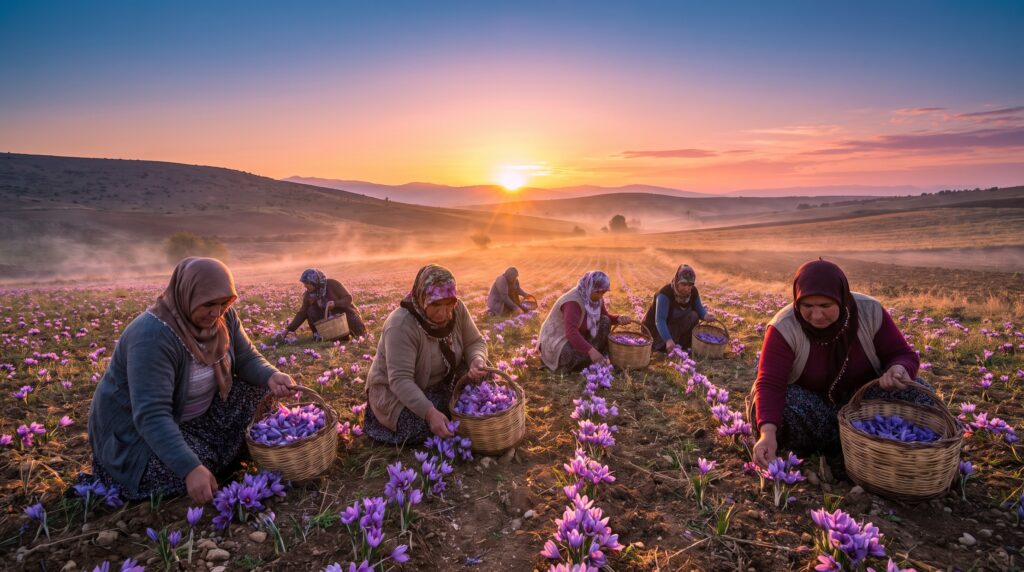
Several of the region’s most valuable crops are still harvested entirely by hand, and in most cases it’s not tradition holding the method back, it’s that no machine has matched the judgment a trained picker brings to the field. Iran’s saffron harvest is the clearest example: each flower produces only a few thin red threads, and every one has to be hand-picked at dawn before the sun causes the blooms to wilt. Iran produces roughly 400 tons of saffron a year, and it takes well over a hundred thousand flowers just to yield a single kilogram of dried threads, which is a big part of why the spice commands such a high price globally.
Egypt’s date harvest works on a similar principle. The country produces about 1.87 million tons of dates annually, more than anywhere else in the world, with workers climbing into palms that can reach over ten meters tall to cut down clusters once they’ve reached full ripeness, a skill typically passed down within farming families over generations. Jordan’s pomegranate harvest, covering more than 2,400 acres and producing around 40,000 tons a year, also relies on hand-cutting with shears rather than pulling, since a damaged branch means a smaller harvest next season. Grapes, lemons, and grapefruits across the region follow the same logic, all still hand-picked to protect delicate skin or a firm branch attachment that no mechanical system currently handles as well as a trained hand.
Pro tip: if you’re growing a crop where bruising, uneven ripening, or fruit firmly attached to the branch is a factor, hand-harvesting is usually still worth the added labor cost, even at a commercial scale, since it protects both the current harvest and the plant’s future yield.
Orchard Fruit: Turkey’s Regional Dominance
Turkey shows up more than any other country on this list, leading regional production in figs (~350,000 tons), watermelons (~3.2 million tons), and apricots (750,000 tons, making it the world’s largest producer). The country’s fig and apricot harvests both depend on repeated passes through the same orchard, since fruit ripens unevenly on the same tree, with figs and apricots destined for drying left slightly longer to build sugar, while fruit headed for the fresh market is picked earlier to survive transport. Turkey’s Aegean coast climate is close to ideal for figs, and the Malatya region has become almost synonymous with apricot production nationally.
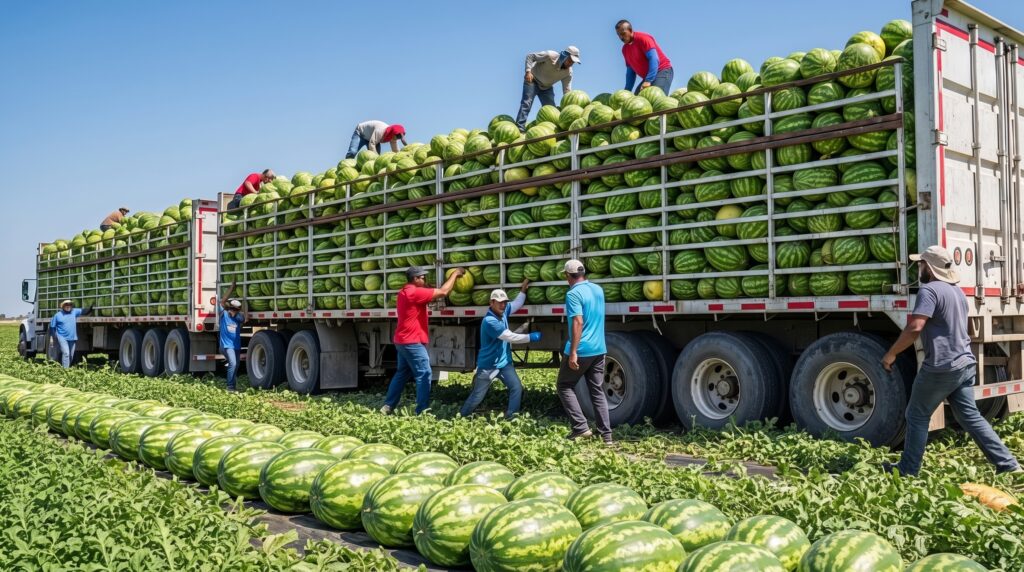
Watermelons are a different physical challenge entirely. Workers judge ripeness by sound and feel, a dull, deep sound signals ripe fruit, before cutting it free, and given how heavy a mature watermelon is, the harvest remains one of the more physically demanding on this list despite how simple it looks. Turkey also supplies 60 percent of the total export value of cucumbers across the Middle East, aided by an expanding greenhouse sector that extends the harvest season well beyond what open-field growing alone could support.
Pro tip: staggering harvest timing across an orchard, rather than treating it as a single event, is one of the simplest ways to reduce fruit loss for any unevenly-ripening crop, a method figs and apricots in Turkey rely on at scale.
Industrial & Mechanized Harvests
Not every crop in the region depends on hand labor. Tomatoes are harvested industrially across the Middle East at an average yield of 21.46 tons per acre, using mechanized systems built for volume rather than delicate handling, since most of the crop is processed into paste and sauce rather than sold fresh. Israel’s onion operations achieve yields of roughly 61.8 tons per acre using specialized machinery that can lift, sort, and prepare the crop for curing in a fraction of the time manual harvesting would take, making it a frequent reference point for other countries in the region looking to modernize.
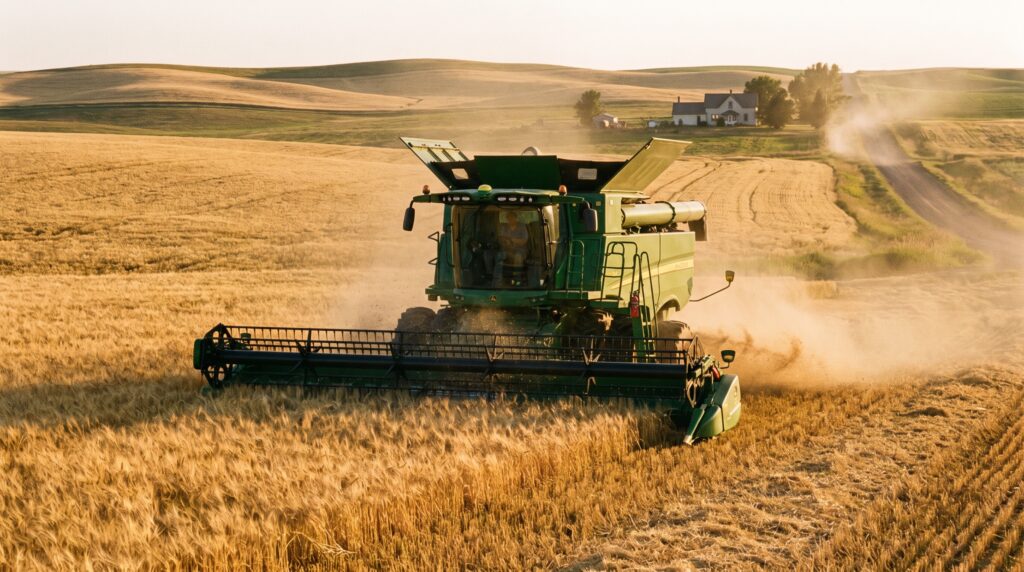
Barley across the region is cut with large combine harvesters in a single continuous pass, much like wheat harvesting elsewhere, and its drought tolerance makes it a dependable crop in the region’s drier growing zones. Saudi Arabia’s melon harvest, producing over 63,000 tons a year, leans on staggered planting and increasingly on drip irrigation to manage water use in an arid climate, while Lebanon’s chickpea sector is working to grow domestic production to 40 percent of total supply by 2030, both a food security move and a soil health one, since chickpeas fix nitrogen for the next planting cycle.
Pro tip: industrial-scale mechanization tends to make the most sense for crops headed to processing rather than the fresh market, since appearance and individual fruit condition matter far less once the crop is being turned into paste, oil, or another processed product.
Harvest Method Checklist: Hand-Picked or Mechanized?
- The crop bruises easily or has uneven ripening on the same plant
- Fruit is firmly attached to the branch and needs a deliberate cutting motion
- Ripeness has to be judged by sound, feel, or color rather than a fixed schedule
- The crop is headed for the fresh market rather than processing
- Water availability and irrigation timing directly affect harvest scheduling
- The crop can tolerate mechanical contact without losing market value
If most of these apply, hand-harvesting is likely still the better fit for quality. If few do, mechanization is worth exploring, particularly for crops headed toward processing rather than direct sale.
FAQ
Which country produces the most valuable harvest in this list? Iran’s saffron is the clear standout by value. At roughly 400 tons a year and requiring well over a hundred thousand hand-picked flowers per kilogram, it’s one of the most labor-intensive crops grown anywhere in the world.
Why do so many Middle Eastern harvests still rely on hand labor? Water scarcity, land shared between smallholder and commercial farms, and crops that bruise or ripen unevenly all push against full mechanization. For many of these crops, no machine has yet matched the judgment a trained picker brings to ripeness and handling.
What’s the most efficient mechanized harvest in the region? Israel’s onion operations, achieving yields of about 61.8 tons per acre using specialized machinery that handles lifting, sorting, and curing prep in a fraction of the time manual harvesting requires.
Is Turkey really the region’s biggest producer? Turkey leads regional production in figs, watermelons, and apricots, and supplies 60 percent of the Middle East’s total cucumber export value, making it the most represented country on this list.
Why is Lebanon investing in domestic chickpea production? Lebanon is targeting 40 percent domestic chickpea supply by 2030 to reduce reliance on imports and strengthen national food security, while also benefiting from the crop’s nitrogen-fixing properties for soil health.
Do any crops on this list come from outside the Middle East? Yes. Florida’s orange harvest (70%+ of US national production) and California’s strawberry harvest (~90% of US production) close out the documentary this guide is based on, offering a contrast between Middle Eastern hand-harvesting traditions and large-scale American citrus and berry production.
Watch the Full Documentary
For the full visual breakdown of all 19 harvests featured in this guide, watch the complete documentary on the Smart Farm Insights YouTube channel.
If you found this breakdown useful, you can find more articles like this one covering farming techniques, equipment, and crop production from around the world at SmartFarmInsights.com. New guides go up regularly, so it’s worth checking back or subscribing to stay updated.
#Harvest #Agriculture #Farming #MiddleEast #Documentary #FarmTech #FarmingTechnology #ModernFarming #FoodProduction #SmartFarmInsights