
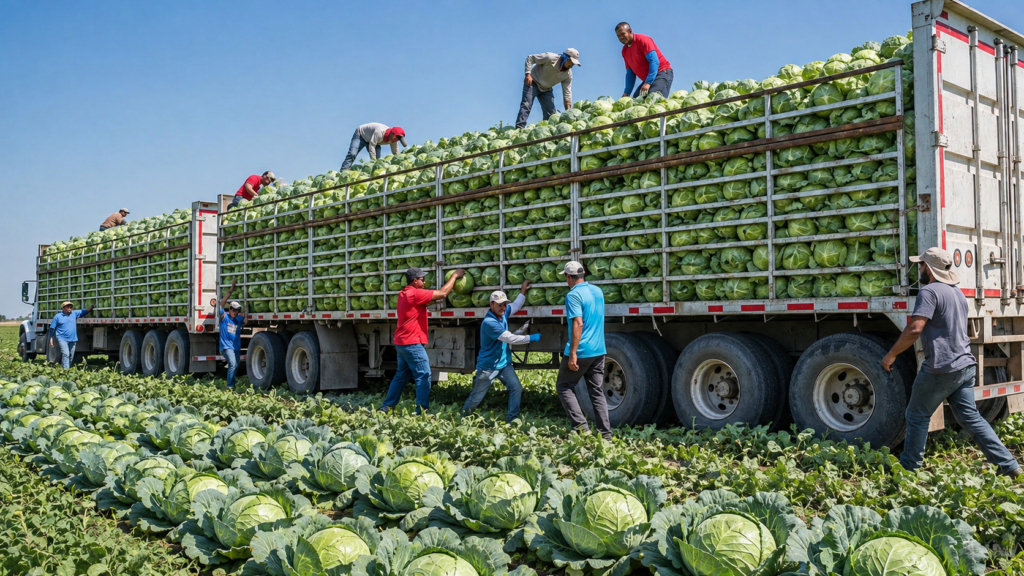
California is the single largest agricultural producer in the United States, supplying the vast majority of the nation’s nuts, table grapes, processed tomatoes, and leafy greens, while also exporting to markets around the world. Behind that output is a combination of fertile land, advanced harvesting technology, and generations of farming expertise working together across the state’s major growing regions.
In this guide, we break down exactly how ten of California’s most important crops are harvested, from fully mechanized nut orchards to hand-picked strawberry fields, along with the production numbers behind each one.
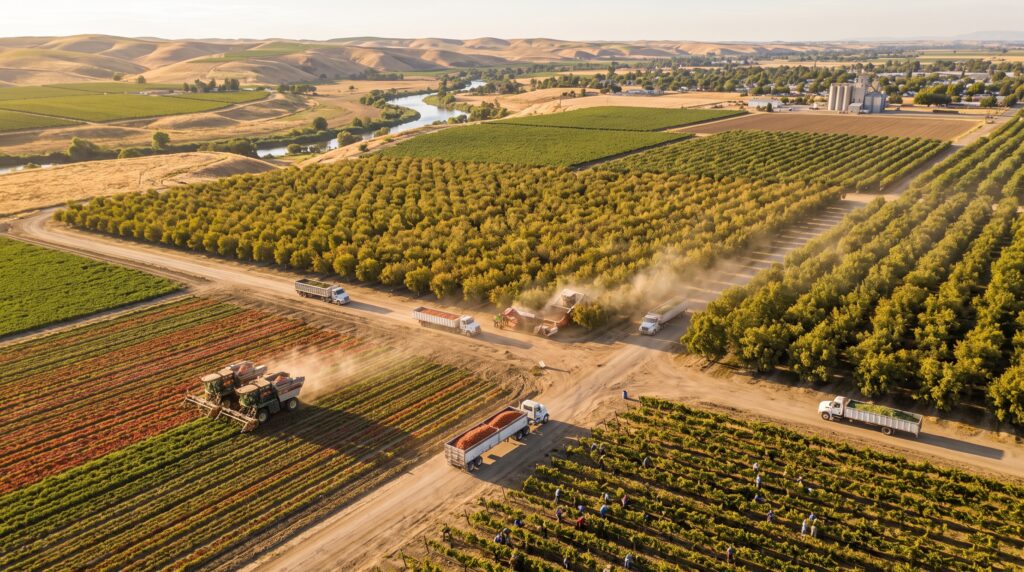
Quick Reference: California Crop Harvest at a Glance
| Crop | Harvest Method | Annual Production | Key Stat |
|---|---|---|---|
| Pistachios | Trunk shaker + vacuum | 500,000-750,000+ tons | 99% of U.S. supply |
| Almonds | Trunk shaker + field drying | 1.2–1.4 million tons | 80%+ of global supply |
| Grapes (table) | Hand-picked | 4-5.5 million tons (all grapes) | 80% of U.S. wine output |
| Grapes (wine) | Night mechanical shaker | 2.6-2.9 million tons | – |
| Walnuts | Shaker + sweeper + vacuum | 700,000–800,000 tons | Nearly all U.S. supply |
| Strawberries | Hand-picked | 1.2-1.4 million tons | 90% of U.S. supply |
| Processed Tomatoes | Machine uprooting + sensors | 10-12 million tons | 90% of U.S., 30% of global supply |
| Lettuce | Hand-cut + conveyor | 3-4 million tons | 70% of U.S. supply |
| Onions | Pulled + field cured | 1-1.3 million tons | – |
| Peaches | Hand-picked | 480,000 short tons | – |
| Kiwi Fruit | Hand-picked + cold storage | 40,000–50,000 tons | Stored at 32–34°F |
Pistachios: Precision Shaking at Scale
California produces about 99% of the entire U.S. pistachio supply, with annual output between 500,000 and 750,000+ tons. Harvesting relies on trunk-shaking machines that clamp onto each tree and release the entire crop in just 5 to 10 seconds. The nuts fall into large catch nets suspended below the canopy, and mechanical vacuum systems then collect everything and feed it into bins. A single harvesting operation can cover 100 to 150 acres in one day.
Pro tip: If you’re growing pistachios on a smaller scale, timing the shake to early morning when nuts are driest helps reduce mold risk during storage.
Almonds: California’s Global Export Leader
Almonds are where California truly dominates globally, supplying over 80% of the world’s almonds and producing between 1.2 and 1.4 million tons annually. Trees are shaken loose using the same mechanical shaker technology as pistachios, but almonds are then left to dry naturally in the field for 5 to 7 days before vacuum equipment sweeps them up. Smart irrigation and soil moisture sensors are used throughout the growing season to fine-tune water use.
Pro tip: Soil moisture sensors placed at multiple depths (not just the surface) give a far more accurate picture of root-zone water availability.
Grapes: Two Crops, Two Completely Different Harvests
Grapes are one of the clearest examples of how end use dictates harvest method. California produces 4–5.5 million tons of grapes annually and accounts for 80% of all U.S. wine production. Table grapes, destined for grocery store shelves, are picked entirely by hand to avoid bruising. Wine grapes, on the other hand, are typically harvested at night using mechanical shakers, which helps preserve flavor and keeps the fruit cool before pressing.
Pro tip: Night harvesting isn’t just about efficiency, cooler grape temperatures at crush reduce oxidation and help retain aromatic compounds in the finished wine.
Walnuts: Shake, Sweep, Vacuum
California grows nearly the entire U.S. walnut supply, totaling 700,000 to 800,000 tons a year. High-powered shakers drop the nuts to the orchard floor, sweepers then gather them into organized rows, and vacuum machinery lifts them directly onto waiting trucks.
Pro tip: Keeping orchard floors clean and weed-free before harvest makes the sweeping stage significantly faster and reduces debris contamination.
Strawberries: Still a Hands-On Crop
Strawberries remain one of the most labor-intensive harvests in California agriculture. The state produces around 1.2-1.4 million tons annually, roughly 90% of the U.S. supply, and because the fruit bruises easily and spoils fast, it is picked entirely by hand. Skilled workers typically harvest between 220 and 440 pounds per day.
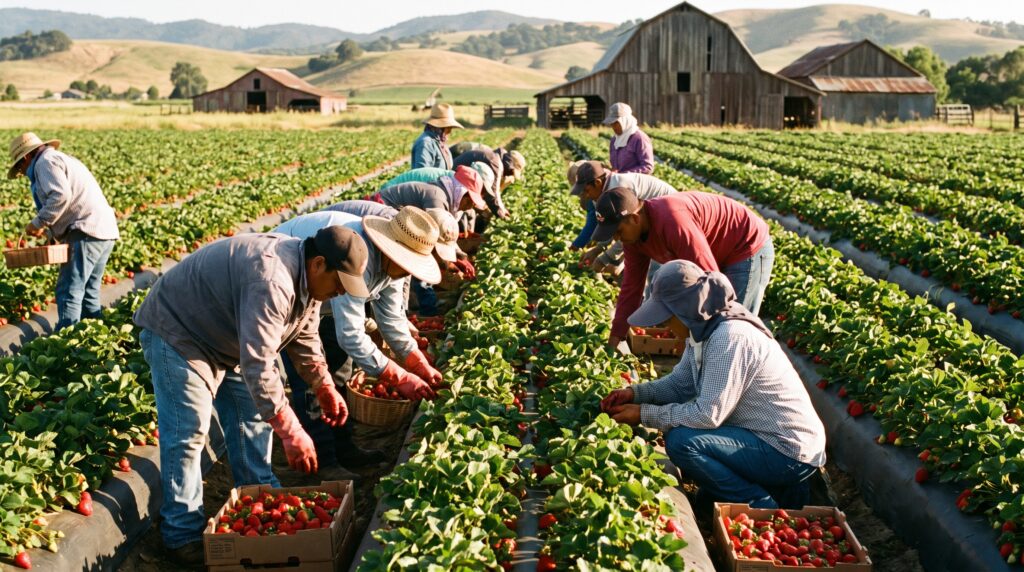
Pro tip: Picking in the cooler morning hours before field heat builds up helps extend post-harvest shelf life significantly.
Processed Tomatoes: Full Mechanization at Massive Scale
Processed tomatoes, the kind used in sauces and canned goods, are harvested very differently from fresh-market produce. California leads the world here, producing 10 to 12 million tons annually – about 30% of global output and 90% of the U.S. supply. Massive harvesters uproot entire plants, separate the fruit automatically, and use onboard sensors to sort out damaged tomatoes in real time. One machine can process 75 to 125 acres per day.
Pro tip: Because sensor sorting relies on color and firmness detection, harvest timing within a 2 to 3 day window significantly affects how much fruit passes quality sorting.
Lettuce: Hand-Cut, Machine-Assisted
California supplies about 70% of the country’s lettuce, producing 3 to 4 million tons per year. The harvest is semi-automated: workers cut heads by hand and place them directly onto conveyor belts attached to harvesting trucks, where the lettuce is cleaned and packaged on-site almost immediately.
Pro tip: On-site packaging right after cutting is one of the biggest reasons commercially harvested lettuce holds up better in transit than home-harvested lettuce.
Onions: The Power of Field Curing
California produces roughly 1–1.3 million tons of onions annually. After being pulled, onions are left in the field to dry naturally under the sun for 3 to 7 days before machines gather and load them. This curing step toughens the outer skin and is critical for long-term storage quality.
Pro tip: Onions cured with good airflow (not stacked too densely) develop a noticeably tougher, longer-lasting skin than those left in piles.
Peaches: Hand-Picked, Then Fully Automated
Peaches bruise easily, so California’s 480,000 short tons of annual production are still picked entirely by hand into specialized bags. From there, the process flips to full automation, with facilities washing, sizing, and packaging the fruit for market.
Pro tip: Picking peaches by feel rather than color alone helps avoid harvesting fruit that looks ripe but hasn’t reached ideal firmness.
Kiwi Fruit: Small Crop, Serious Cold Chain
Kiwi is California’s smallest crop on this list, at 40,000 to 50,000 tons annually, but it requires some of the most precise post-harvest handling. Fruit is hand-picked to protect the delicate skin, then moved into cold storage held between 32 and 34°F, which slows ripening and significantly extends shelf life.
Pro tip: Kiwi continues to ripen after harvest, so consistent cold-chain temperatures matter more here than for almost any other crop on this list.
Hand-Harvested vs. Machine-Harvested: A Quick Comparison
| Harvest Type | Crops | Why |
|---|---|---|
| Fully mechanized | Pistachios, Almonds, Walnuts, Processed Tomatoes | Durable produce, high volume, cost efficiency |
| Fully hand-picked | Strawberries, Peaches, Kiwi, Table Grapes | Fragile fruit, bruises easily, quality-sensitive |
| Hybrid (hand + machine) | Lettuce, Onions, Wine Grapes | Judgment needed at harvest, mechanized handling after |
California Harvest Checklist: What Makes Each Crop Work
- Match harvest timing to fruit/nut maturity, not just the calendar
- Use mechanical shakers only on crops with tough enough skin (nuts, wine grapes)
- Hand-pick fragile fruit (strawberries, peaches, kiwi, table grapes) to protect quality
- Allow proper field drying/curing time for almonds and onions
- Maintain consistent cold storage temperatures for kiwi and other delicate produce
- Use sensor-based sorting for high-volume crops like processed tomatoes
- Package leafy greens on-site immediately after cutting to preserve freshness
- Monitor soil moisture at multiple depths for accurate irrigation decisions
Frequently Asked Questions
Why does California produce so much of the country’s food supply? A combination of fertile soil across its major valleys, a long growing season, advanced irrigation infrastructure, and decades of accumulated farming expertise allows California to out-produce most other U.S. agricultural regions.
Why are some crops harvested by machine and others by hand? It comes down to fruit fragility. Durable crops like nuts and processed tomatoes can withstand mechanical shaking and handling, while delicate fruit like strawberries, peaches, and kiwi bruise too easily for machines and require hand-picking.
Why are wine grapes harvested at night? Night harvesting keeps grapes cooler, which helps preserve flavor and reduces oxidation before the fruit reaches the crush pad.
What is field curing and why does it matter for onions? Field curing is the process of letting onions dry naturally in the sun after being pulled. It toughens the outer skin, which significantly improves how well the onions store over time.
How is technology changing California harvesting? Smart irrigation systems, soil moisture sensors, and automated sorting technology are allowing farmers to use less water, reduce waste, and process larger volumes of crops with greater precision than ever before.
Is California agriculture sustainable at this scale? Many California growers are adopting precision irrigation, soil monitoring, and mechanized efficiency specifically to reduce water use and environmental impact while maintaining high production volumes.
YouTube video here
“How California Farmers Harvest 29.5 Million Tons of Fruits and Vegetables Per Day”
Want to See This in Action?
For a full visual breakdown of how each of these crops is harvested, from trunk shakers to hand-picked strawberry fields, check out our latest documentary on the Smart Farm Insights YouTube channel, where we cover the machinery, timing, and technology behind California’s biggest harvests in detail.
If you found this guide useful, explore more in-depth farming articles and crop guides at SmartFarmInsights.com, where we regularly break down agricultural techniques from around the world.