
A step-by-step troubleshooting guide for gardeners staring at a plant full of blossoms and an empty harvest basket
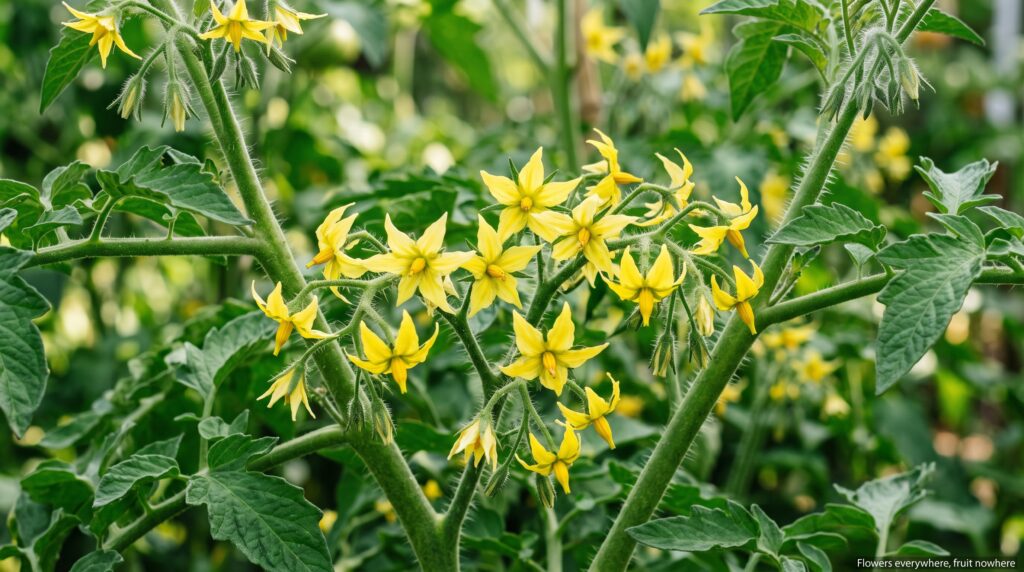
If your tomato plant is covered in cheerful yellow flowers but you still haven’t picked a single tomato, you are not alone and you are not doing something fundamentally wrong. This is one of the most common problems gardeners search for every single season, and the good news is that it’s almost always fixable in a matter of days once you know exactly what’s blocking fruit set. Below is a complete breakdown of the causes, the fixes, and a simple 3 day action plan you can start today.
Quick Reference: Causes and Fixes at a Glance
| Cause | How to Spot It | Fix Time |
|---|---|---|
| Temperature stress (too hot or too cold) | Flowers drop or shrivel without swelling | 2-3 days after temps stabilize |
| Poor pollination | Flowers stay open longer than usual, no tiny green fruit forming | 1-3 days with hand pollination |
| Excess nitrogen | Plant is huge, dark green, bushy, but few flowers set | 3-5 days after feeding change |
| Inconsistent watering | Flowers drop after a dry spell or sudden heavy watering | 2-3 days after routine fixed |
| Low humidity or high wind | Pollen dries out or blows away before it can fertilize | 1-2 days with misting/wind block |
| Blossom drop from stress shock | Flowers fall off cleanly at the stem joint | 3 days after stressor removed |
![Side-by-side comparison photo a tomato flower with pollen clearly visible vs. a dried, dropped flower on the soil]](https://smartfarminsights.com/wp-content/uploads/2026/07/Tomato_flower_vs_dried_flower_202607231850-1024x572.jpeg "Why Your Tomatoes Have Flowers But No Fruit And How To Fix It In 3 Days ?")
Why This Happens: The Real Explanation
A tomato flower is a perfect flower, meaning it has both male and female parts in the same bloom. In theory, it can pollinate itself. In practice, that pollination depends on very specific conditions — vibration, wind, insects, or a light shake from your hand combined with a temperature range the plant is comfortable in. When any of those pieces are missing, the flower simply opens, sits there, and eventually falls off without ever becoming a tomato.
Think of it less as “the plant is broken” and more as “the plant is waiting for the right moment.” Your job over the next three days is to remove whatever is telling it to wait.
Pro tip: Walk out to your tomato plants around midday and gently flick a few flower clusters with your finger. If you see a small puff of yellow pollen dust, pollination is happening your problem is likely elsewhere, like temperature or watering.
Cause 1: Temperature Stress
Tomatoes are picky about temperature during flowering. Daytime highs above 90°F (32°C) or nighttime lows below 55°F (13°C) can cause the pollen to become sterile or too sticky to transfer properly. The flower may still look perfectly healthy, which is why so many gardeners get confused — everything looks fine, but nothing is fertilizing.
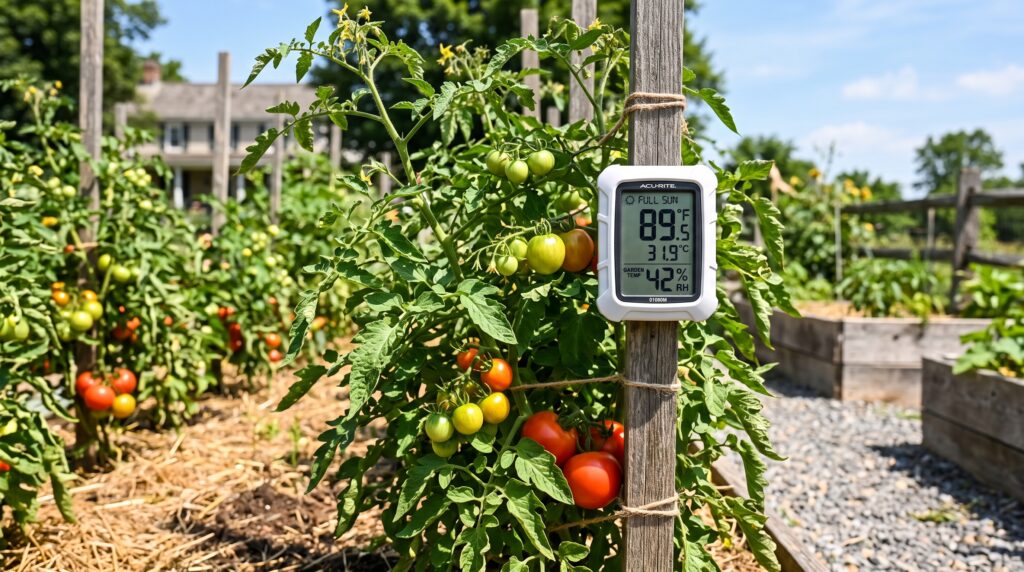
How to fix it in 3 days:
- Add 30-40% shade cloth over plants during afternoon heat spikes
- Water deeply in the early morning so the plant enters the hot part of the day well hydrated
- If nights are cold, cover plants with a light row cover after sunset and remove it by mid-morning
Pro tip: Once daytime highs drop back into the 70-85°F (21-29°C) range, you should see new flowers holding on and tiny green fruit forming within 48-72 hours.
Cause 2: Poor Pollination
No bees, no wind, no gardener shaking the plant, no fertilized flowers. This is especially common for container gardens on balconies, greenhouse tomatoes, or gardens in areas with few pollinators.
How to fix it in 3 days:
- Every morning, gently shake each flowering stem for a few seconds, or tap it with a pencil
- Use an electric toothbrush against the stem behind the flower cluster to mimic “buzz pollination”
- Attract more bees by planting a few low-cost companions nearby like basil or marigold
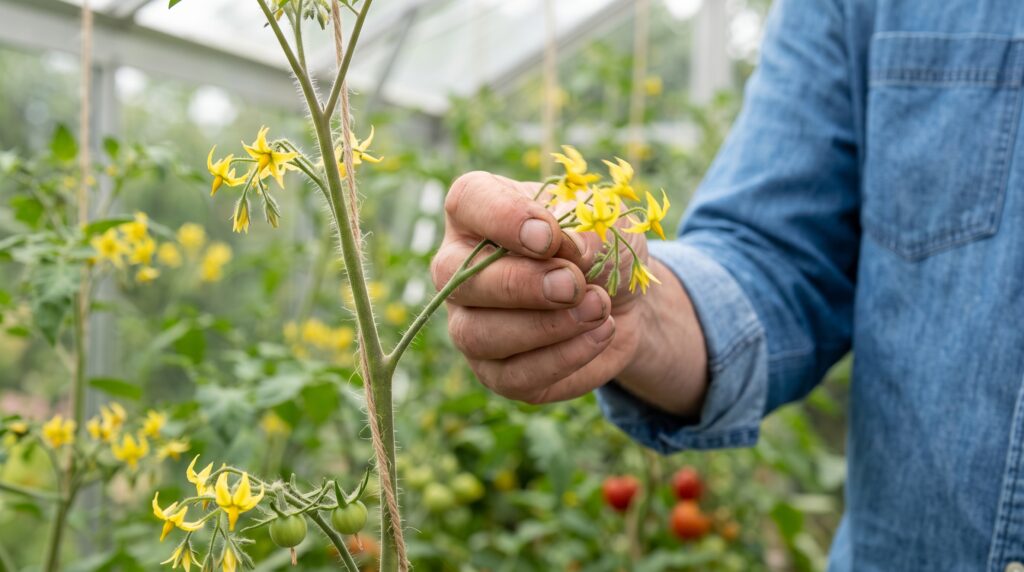
Pro tip: Do your hand-pollination between 9am and noon, when pollen is driest and most viable. Pollinating too early in cool morning dew or too late in humid evening air is much less effective.
Cause 3: Too Much Nitrogen
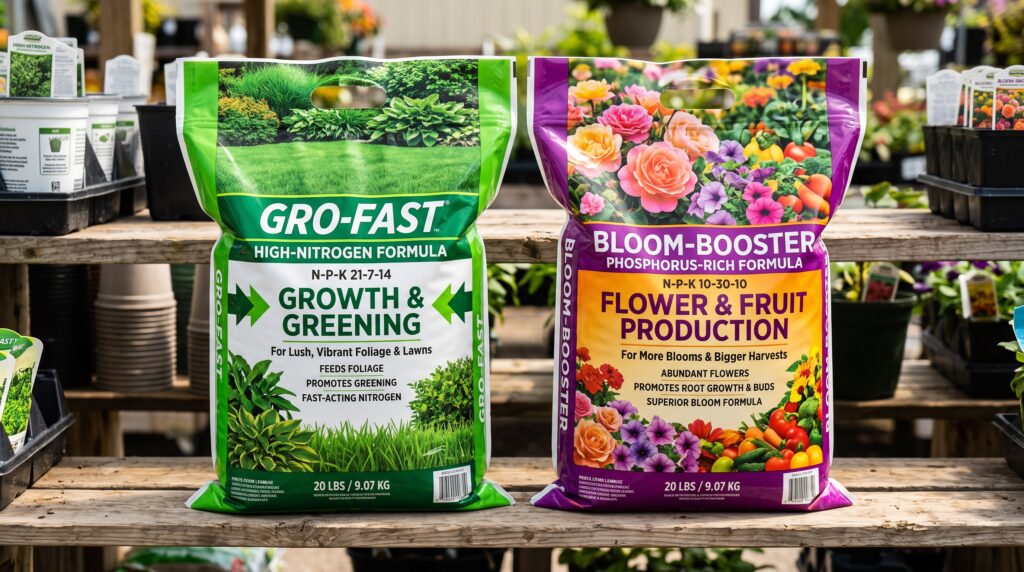
If your tomato plant looks like a jungle thick stems, huge dark green leaves, very few flowers, and the flowers it does have keep dropping nitrogen is almost always the culprit. Nitrogen tells the plant to grow leaves and stems; it does not tell the plant to grow fruit.
How to fix it in 3 days:
- Stop any nitrogen-heavy fertilizer immediately
- Switch to a bloom-booster fertilizer with a higher middle number (phosphorus), such as a 5-10-10 or similar ratio
- Water it in well so the plant can access it quickly
Pro tip: A tomato plant that has been overfed nitrogen usually needs 5-7 days to slow its leaf growth and redirect energy to flowering, but you’ll often see the flower-drop stop within 3 days of switching feed.
Cause 4: Inconsistent Watering
Tomatoes hate extremes. A dry spell followed by a heavy soak (or the reverse) puts the plant into stress mode, and one of the first things it does under stress is drop flowers to conserve energy.
How to fix it in 3 days:
- Water deeply 2-3 times per week rather than a little every day
- Add 2-3 inches of mulch around the base to hold consistent soil moisture
- Check soil moisture with a finger 2 inches down before watering if it’s still damp, wait
Pro tip: Consistency matters more than quantity. A predictable watering schedule will stabilize flower retention faster than simply watering more.
Cause 5: Low Humidity or Wind
Extremely dry air can cause pollen to dry out before it transfers. Strong, constant wind can do the same by blowing pollen away or drying the stigma too fast.
How to fix it in 3 days:
- Mist the flower clusters lightly in the early morning if your climate is very dry
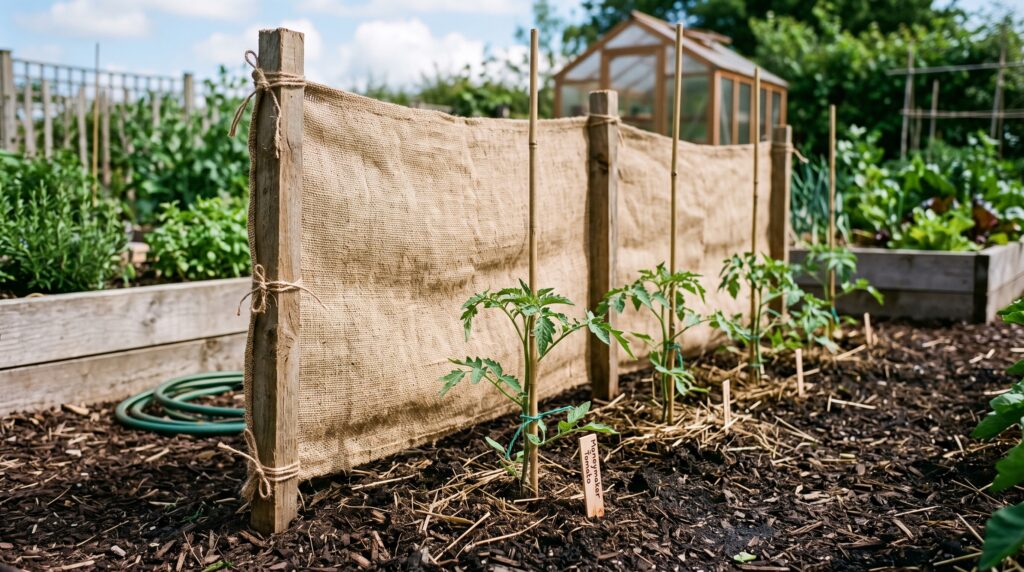
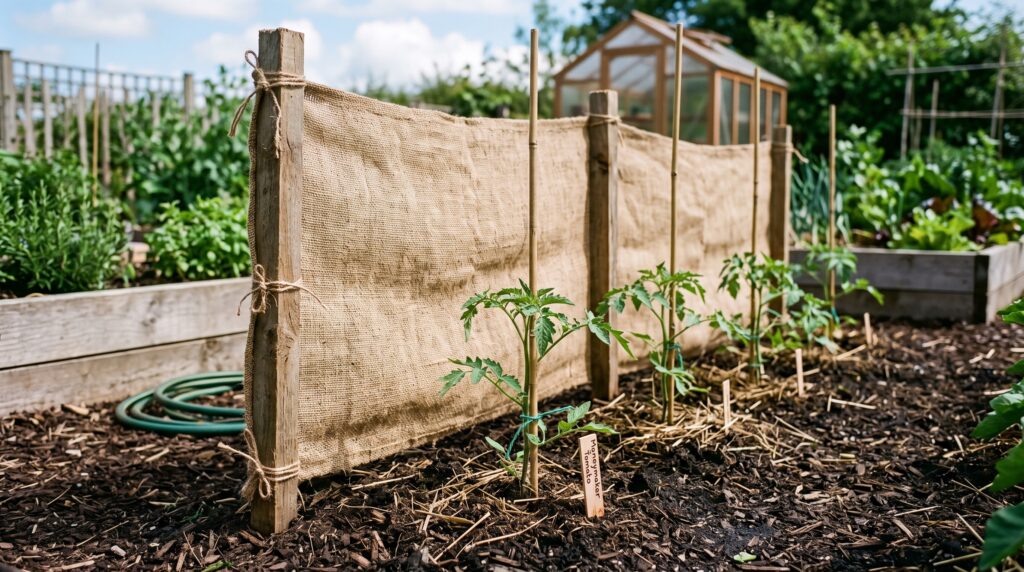
- Add a temporary windbreak (a stake and burlap panel works fine) on the side facing prevailing wind
- Avoid misting in the evening, since damp flowers overnight can encourage fungal issues
Your 3-Day Fix-It Checklist
- Day 1: Identify which cause matches your symptoms using the table above
- Day 1: Remove the stress source (adjust shade, fix watering schedule, or switch fertilizer)
- Day 1: Begin hand-pollinating every flower cluster once per day
- Day 2: Continue hand-pollination in the 9am-noon window
- Day 2: Recheck soil moisture and mulch coverage
- Day 3: Look for tiny swelling at the base of pollinated flowers this is the first sign of a forming tomato
- Day 3: Keep monitoring temperature and adjust shade cloth or row covers as needed
- Ongoing: Repeat hand-pollination daily until natural pollinators take over
What You Should See By Day 3
If you’ve matched the right fix to the right cause, you should notice the flower base starting to swell slightly and the petals beginning to shrivel and fall away naturally that’s actually a good sign, because it means the flower did its job and a tiny tomato is forming underneath. If flowers are still dropping cleanly with no swelling after three days, revisit the table above; it’s common for two causes to overlap, most often heat stress combined with inconsistent watering.
Related Reading
If flower drop was your issue, it’s worth checking whether other common problems are compounding it. See our guide on 7 Critical Tomato Growing Mistakes for the habits that quietly reduce yield all season, and 5 Secret Tomato Tricks for techniques that boost fruit set even in a normal, healthy plant.
Frequently Asked Questions
Q: How long does it normally take for a tomato flower to turn into a tomato? A: Once a flower is successfully pollinated, you’ll typically see a small green fruit forming within 5-7 days, with full-size green tomatoes appearing over the following 3-4 weeks depending on variety.
Q: Can I still fix flower drop if it’s been happening for weeks? A: Yes. Established plants can recover quickly once the underlying stress is removed you’ll usually see new, healthier flowers within a week of correcting temperature, watering, or feeding issues.
Q: Do I need bees for tomatoes to set fruit? A: No. Tomatoes are self-pollinating and rely mainly on wind and vibration rather than bees, which is why hand-shaking or buzz-pollinating with a toothbrush works so well.
Q: Is it normal for some flowers to drop even on a healthy plant? A: Yes, a small percentage of flower drop is completely normal. The concern is when the majority of flowers on a cluster are dropping with no fruit forming at all.
Q: Will pruning my tomato plant help with flower drop? A: Removing excess suckers and lower leaves can improve airflow and redirect energy toward flowering, which helps, but pruning alone won’t fix a temperature, watering, or nitrogen problem.
Q: Can container-grown tomatoes have this problem more often? A: Yes, containers dry out faster and heat up more in direct sun, which makes both watering inconsistency and temperature stress more common daily monitoring is especially important for potted tomatoes.
Everything we covered today is available as a full written guide at SmartFarmInsights.com bookmark this page and check back for updates as the season progresses.
SEO Tags: tomato flowers no fruit, tomato blossom drop, why are my tomato flowers falling off, hand pollinating tomatoes, tomato fruit set problems, tomato flower to fruit, tomato growing tips, tomato pollination guide, blossom drop causes, home garden troubleshooting