
By Smart Farm Insights
Updated: June 2026
Category: Tomato Growing, Organic Fertilizers, Gardening Tips
Have You Ever Had Tomato Plants That Bloom But Don’t Produce Fruit?
You watered them. You fertilized them. You gave them plenty of sunlight. Yet the flowers appeared, dropped off, and produced little or no fruit.
If this has happened to you, you’re not alone. It’s one of the most frustrating problems for gardeners.
In this guide, you’ll learn five practical tomato-growing techniques that can help improve fruit production, increase yields, and strengthen plant health with very little additional cost.
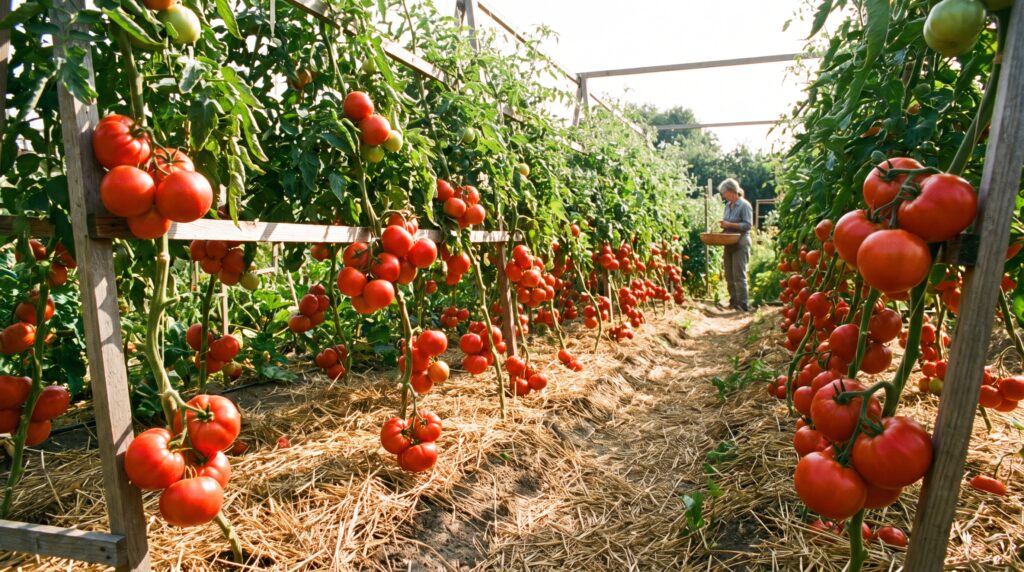
Why Most Tomato Plants Underperform
Many tomato plants fail to reach their full potential because of one or more of the following issues:
- Nutrient imbalances
- Weak root development
- Plant stress during critical growth stages
The five techniques below address these common problems and can help improve overall plant performance.
Quick Results Overview
| Tip | Technique | Main Benefit | Cost |
|---|---|---|---|
| 5 | Horizontal planting | Stronger roots, more fruit | Free |
| 4 | Smart cluster pruning | Larger, sweeter fruits | Free |
| 3 | Brown sugar and baking soda formula | Supports soil microbes and disease resistance | Very Low |
| 2 | White vinegar methods | Disease prevention and root support | Very Low |
| 1 | Fermented fruit booster | Helps flowering plants set fruit | Very Low |
Tip 5: Plant Tomato Seedlings Horizontally
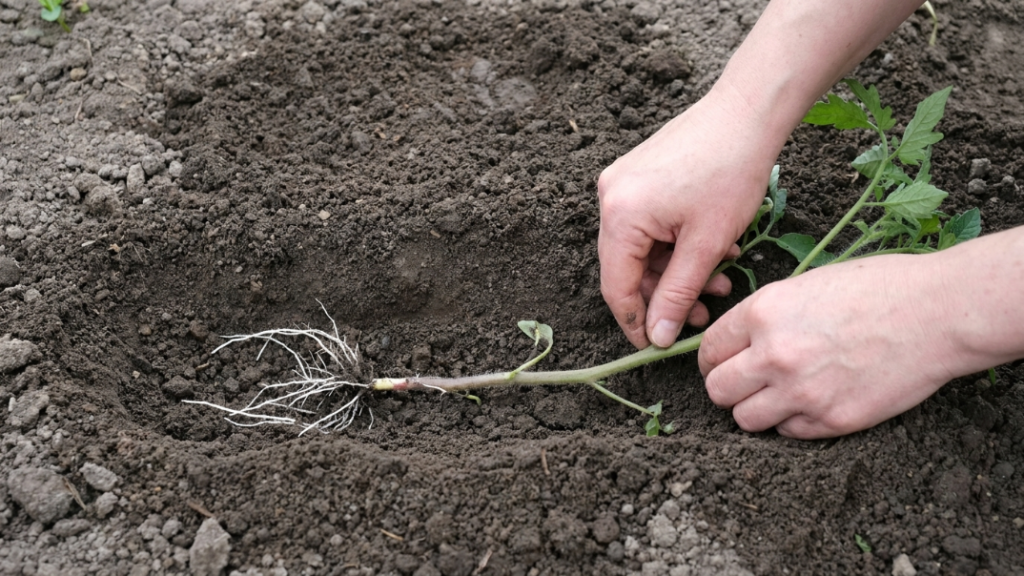
When transplanting tomato seedlings that are approximately 30 cm tall, lay them horizontally in a shallow trench instead of planting them upright.
Benefits
Encourages More Root Growth
Tomato stems can develop roots along buried sections. By planting horizontally, much more of the stem becomes a root-producing zone, resulting in a larger root system.
Improves Nutrient Uptake
A larger root system can absorb water and nutrients from a wider area of soil.
Helps Maintain Manageable Plant Height
Excessively tall plants often become harder to manage and may produce less efficiently over time. Horizontal planting can help keep growth more compact.
Pro Tip : Leave approximately 10 to 15 cm of the growing tip above the soil surface. Within a few days, the plant will naturally bend upward while developing roots along the buried stem.
Tip 4: Smart Cluster Pruning
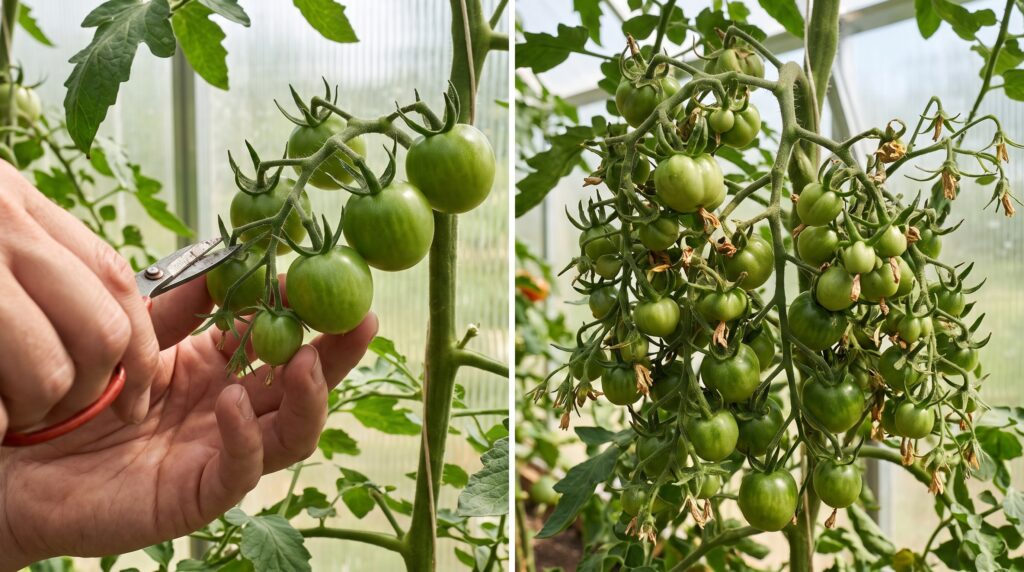
Many gardeners assume that more fruits per cluster automatically means a larger harvest.
However, a tomato plant has limited energy and resources. When too many fruits develop on a single cluster, individual fruits often remain small and may not mature optimally.
Recommended Practice
Maintain approximately four to five fruits per cluster.
Remove the smallest and weakest developing fruits early in the growth process. This allows the remaining fruits to receive more nutrients and energy.
Benefits
- Larger fruits
- Better color development
- Improved sweetness
- More consistent fruit quality
Pro Tip : Remove fruits from the ends of the cluster first. Fruits closest to the main stem typically receive the most nutrients and develop more strongly.
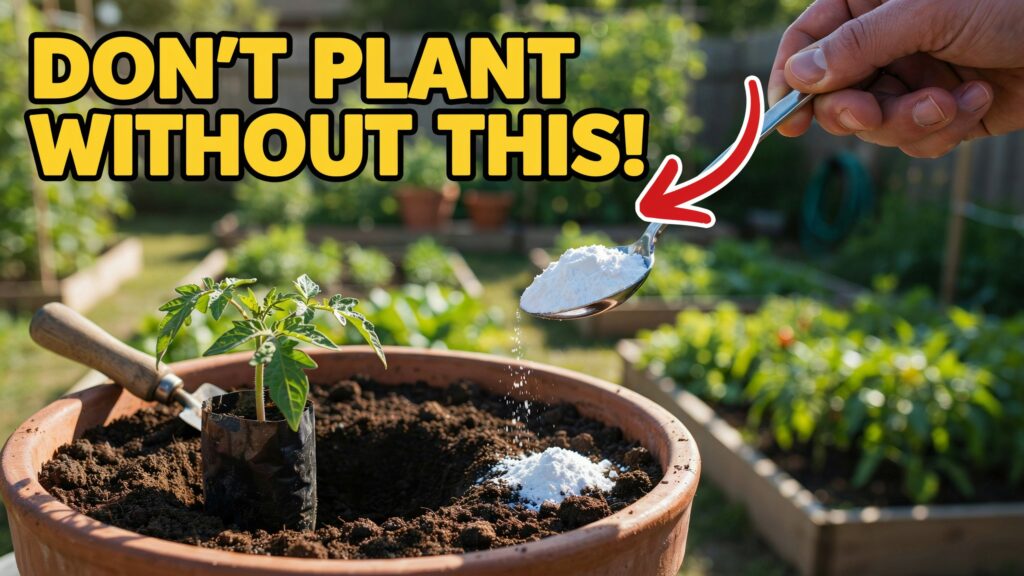
Tip 3: Brown Sugar and Baking Soda Formula

Recipe
- 20 g brown sugar
- 15 g baking soda
- Water
Mix thoroughly in a watering can or spray bottle.
Apply once per week either:
- Around the root zone
- As a foliar spray
Why Brown Sugar?
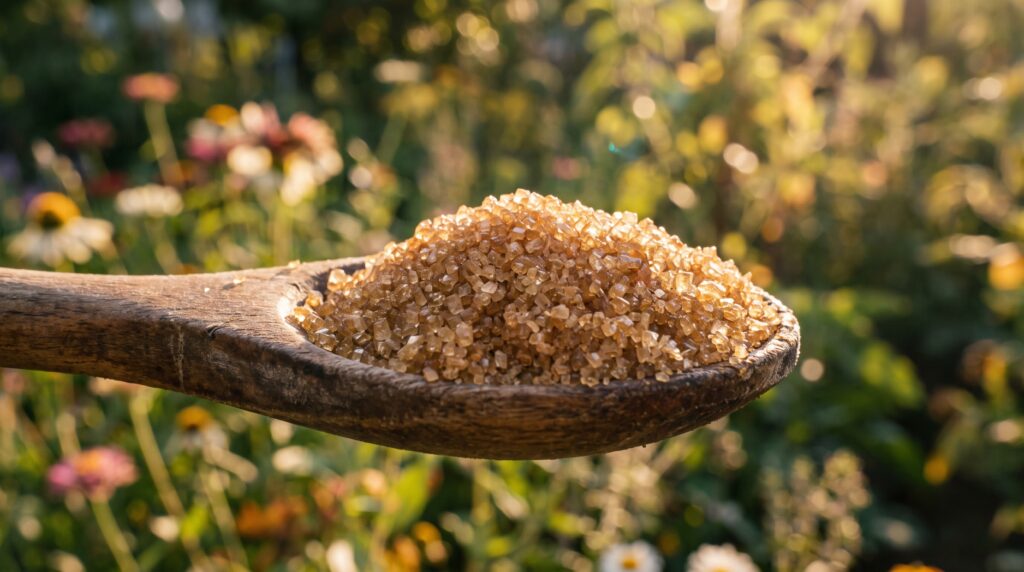
Brown sugar feeds the beneficial microorganisms that already live in your soil. Healthy soil is full of microscopic bacteria and fungi that work constantly to break down organic matter, release nutrients, and improve soil structure. These microbes need carbon to thrive, and brown sugar provides it in a form they can absorb quickly.
When soil microbe populations are strong and active, your plants can access nutrients more efficiently, root systems develop faster, and the soil itself becomes healthier over time. The baking soda works alongside the sugar by gently balancing soil pH and creating an environment that is slightly less hospitable to fungal pathogens — the organisms responsible for powdery mildew, leaf spot, and similar problems.
Is brown sugar safe to use on plants? Yes, completely. The quantity used in this formula is 20 grams per application and it is very small relative to the volume of water it is diluted into. It does not burn roots, alter soil chemistry in harmful ways, or leave any residue that affects fruit flavor or safety. It has been used by organic gardeners in various forms for many years.
Important Warning About Brown Sugar
There is one side effect to be aware of, and we want to be completely transparent about it
Brown sugar can attract ants if overused.
At the recommended quantity of 20 grams per application, this is generally not a problem because the sugar is heavily diluted by the time it reaches the soil. However, if you significantly increase the quantity or apply it too frequently — for example, every day rather than once per week — you may notice increased ant activity around your plants.
Ants themselves do not damage tomatoes directly. However, ants farm aphids, and an increase in ant activity can sometimes lead to a secondary aphid problem.
To avoid this: Stick to the recommended 20-gram quantity. Do not exceed it thinking more sugar means more benefit — it does not work that way. The benefit comes from the
microbial stimulation, which reaches its peak effect at this quantity and does not improve with higher doses
Why Baking Soda?
Baking soda may help create conditions that are less favorable for certain fungal diseases while also helping moderate pH conditions.
Important Warning
Using excessive amounts of sugar may attract ants.
Stick to the recommended quantity of 20 g per application and apply no more than once per week.
Pro Tip : If ant activity increases, reduce the amount to 15 g and consider adding a small amount of neem oil.
This formula may also be used on:
- Cucumbers
- Eggplants
- Peppers
- Various vegetable crops
Tip 2: White Vinegar — Three Useful Applications
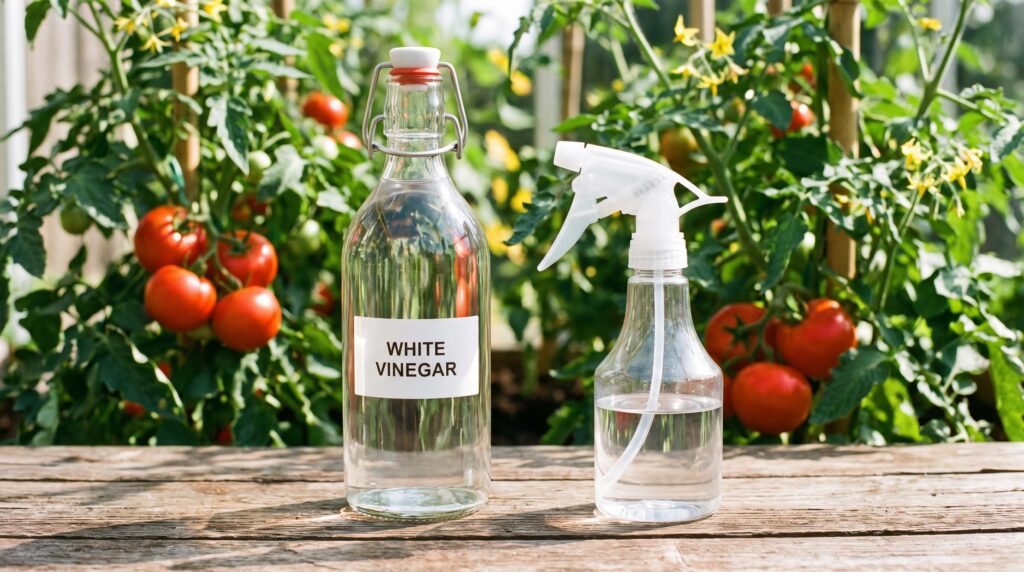
Method 1: Disease Prevention Spray
Recipe
- 15 ml white vinegar
- 10 ml white wine
- 30 liters water
Mix and spray directly onto your plant’s leaves and stems as a preventive treatment against the most common tomato diseases — powdery mildew, anthracnose, and leaf spots.
The mild acidity of the diluted vinegar creates a surface environment on the leaves that makes it difficult for fungal spores to establish and spread. This is a preventive spray, not a
cure — it works best when applied before problems appear, or at the very first sign of trouble.
Apply every two weeks during humid weather, or once a month during dry conditions.
Application Frequency
- Every two weeks during humid conditions
- Monthly during dry weather
Method 2: Root Support Formula
Recipe
- 20 ml white vinegar
- 10 g brown sugar
- 20 g wood ash
- 20 liters water
Apply directly to the soil around the plant roots.
Benefits
- Supports root development
- Provides potassium and calcium from wood ash
- Encourages microbial activity
Application Frequency
Every two weeks during active growth.
Method 3: Trace Element Booster
Recipe
- 15 ml white vinegar
- 10 g baking soda
- 25 ml beer
- 30 liters water
Spray onto leaves, stems, and developing fruits.
Benefits
Beer contains:
- B vitamins
- Amino acids
- Trace minerals
These nutrients may support overall plant vigor.
Application Frequency
Every two weeks, alternating with the disease prevention spray.
Pro Tip : Do not combine the disease prevention spray and trace element booster into one mixture. Alternate applications for best results.
Tip 1: Fermented Fruit Booster
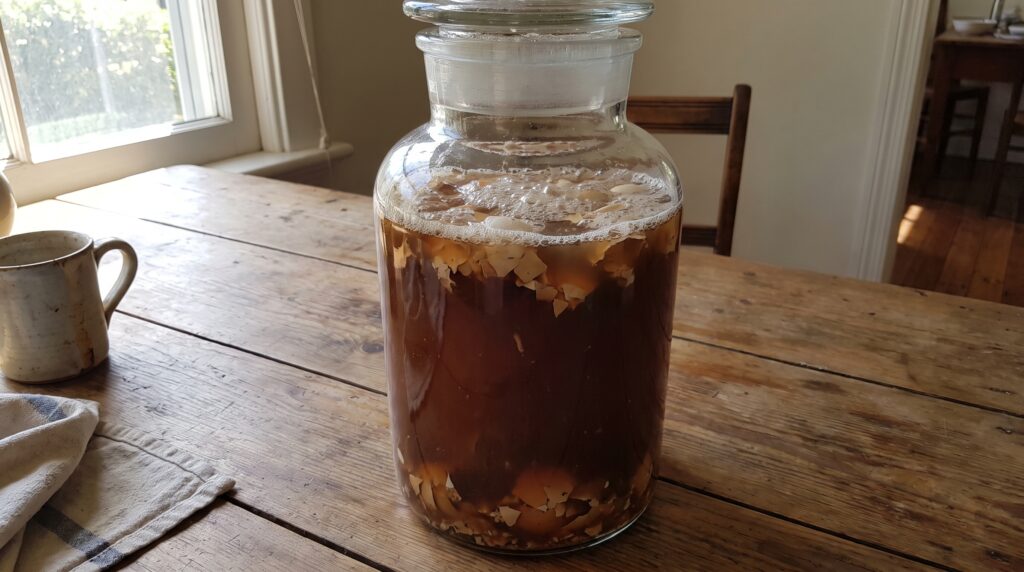
This is the tip that started everything. The technique that directly solves the single most frustrating problem in tomato growing — plants that bloom abundantly but refuse to produce fruit.
If your tomatoes are blooming but not fruiting, producing more green than red, or giving you cracked and deformed fruits — this fermented booster formula is your answer
Ingredients
- 50 g brown sugar
- 10 g yeast powder
- 15 crushed eggshells
- 500 g beer
- 4 liters water
Preparation
- Combine all ingredients thoroughly.
- Cover loosely to allow gas to escape.
- Ferment for at least 72 hours at room temperature.
- After fermentation, dilute 500 g of the mixture into 4 liters of fresh water.
- Apply as a foliar spray, root drench, or both.
When to Apply
| Growth Stage | Plant Activity | Purpose |
|---|---|---|
| Vegetative Growth | Building stems and leaves | Supports healthy development |
| Young Fruit Stage | Fruits begin forming | Encourages fruit development |
| Fruit Expansion Stage | Fruits enlarge | Supports fruit size and quality |
Why This Formula Works
The fermentation process produces beneficial compounds that may help support:
- Nutrient availability
- Soil microbial activity
- Root health
- Calcium availability from eggshells
- Overall fruit development
The eggshells provide calcium, an important nutrient associated with healthy fruit formation.
Pro Tip : After fermentation, the mixture may develop a sour, yeasty smell. This is normal.
Store in a sealed container in a cool location for up to two weeks.
Complete Weekly Tomato Care Routine
| Week | Monday | Thursday |
|---|---|---|
| Week 1 | Brown sugar and baking soda | Disease prevention spray |
| Week 2 | Root support vinegar formula | Trace element booster |
| Week 3 | Brown sugar and baking soda | Fermented fruit booster |
| Week 4 | Root support vinegar formula | Disease prevention spray |
Apply the fermented booster during the critical growth stages whenever needed.
Tomato Growing Checklist
At Transplanting
- Plant seedlings horizontally
- Leave 10 to 15 cm of growth above soil
- Water thoroughly after planting
Throughout the Season
- Prune clusters to four or five fruits
- Apply brown sugar and baking soda weekly
- Monitor for ant activity
- Alternate vinegar treatments every two weeks
- Prepare fermented booster before major growth stages
Fermented Booster Timing
- Vegetative growth stage
- Young fruit stage
- Fruit expansion stage
Frequently Asked Questions
Is Brown Sugar Safe for Vegetable Plants?
Yes. When used in small diluted quantities, it serves primarily as a food source for beneficial soil microorganisms.
Can I Use More Brown Sugar for Better Results?
No. Increasing the amount may attract ants and generally does not improve effectiveness.
What Type of Beer Should Be Used?
Any standard lager or ale can be used.
How Long Can the Fermented Booster Be Stored?
Up to two weeks in a sealed container stored in a cool location.
Can These Formulas Be Used on Other Vegetables?
Yes. They may also be used on cucumbers, peppers, eggplants, and other vegetable crops.
My Tomatoes Are Blooming but Not Producing Fruit. Which Tip Should I Try First?
The fermented fruit booster is specifically intended to support flowering plants that are struggling to set fruit.
Final Thoughts
Successful tomato production depends on healthy roots, balanced nutrition, and proper timing. By combining these five techniques into a consistent routine, gardeners can improve plant vigor, fruit quality, and overall harvest potential throughout the growing season.
Thank you for reading, and if you prefer visual demonstrations, click the video below to see these tomato-growing techniques in action.