
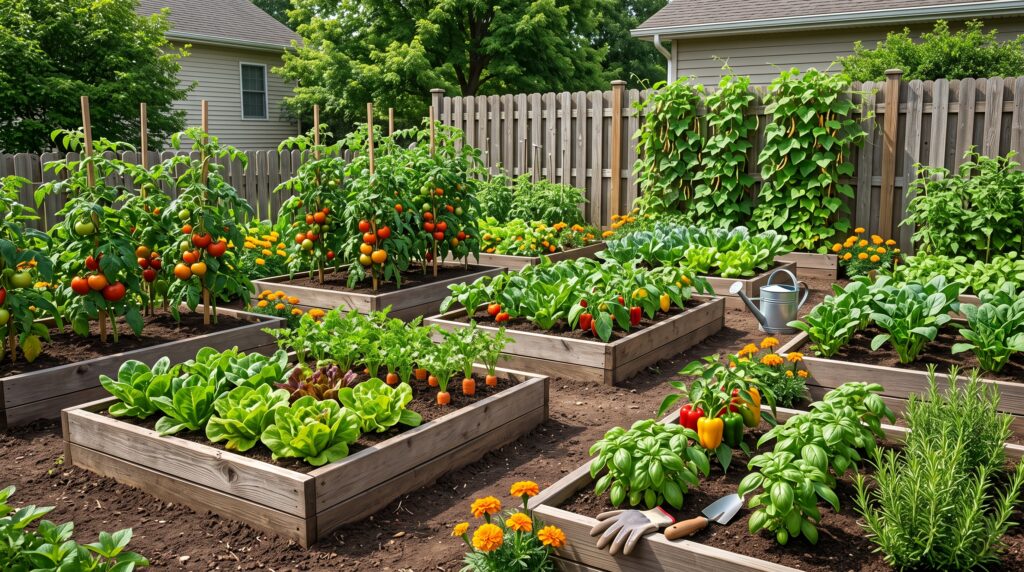
Starting your first vegetable garden can feel overwhelming. Where do you even begin? The good news is that growing your own food doesn’t require a green thumb, expensive equipment, or years of experience. With the right plan, almost anyone can turn a small patch of soil, or even a few containers, into a productive vegetable garden within a single season.
In this guide, we’ll walk through every step of starting a vegetable garden from scratch: choosing a location, prepping your soil, picking beginner-friendly crops, planting, watering, and maintaining your garden through the season.
Quick Reference: Vegetable Garden Basics
| Factor | Recommendation |
|---|---|
| Sunlight needed | 6-8 hours direct sun per day for most vegetables |
| Best soil pH | 6.0 – 6.8 (slightly acidic to neutral) |
| Starter garden size | 4×4 ft or 4×8 ft raised bed (manageable for beginners) |
| Easiest beginner vegetables | Lettuce, radishes, green beans, zucchini, tomatoes |
| Watering frequency | 1-2 inches of water per week (adjust for rain/heat) |
| Time to first harvest | 25-70 days depending on crop |
| Best time to start | Early spring (after last frost) or early fall |
Pro Tip: If you’re not sure when your last frost date is, search “[your city] last frost date.” This single piece of information will shape your entire planting schedule.
Step 1: Choose the Right Location
Before buying a single seed, walk your yard (or check your balcony/patio) and track how much direct sunlight different spots get over the course of a day. Most vegetables, like tomatoes, peppers, squash, and cucumbers, need 6-8 hours of direct sun. Leafy greens like lettuce and spinach can tolerate a bit more shade, around 4-6 hours.
Also consider:
- Water access: pick a spot close to a hose or water source
- Drainage: avoid low spots where water pools after rain
- Wind exposure: a spot with some wind protection helps prevent damage to young plants
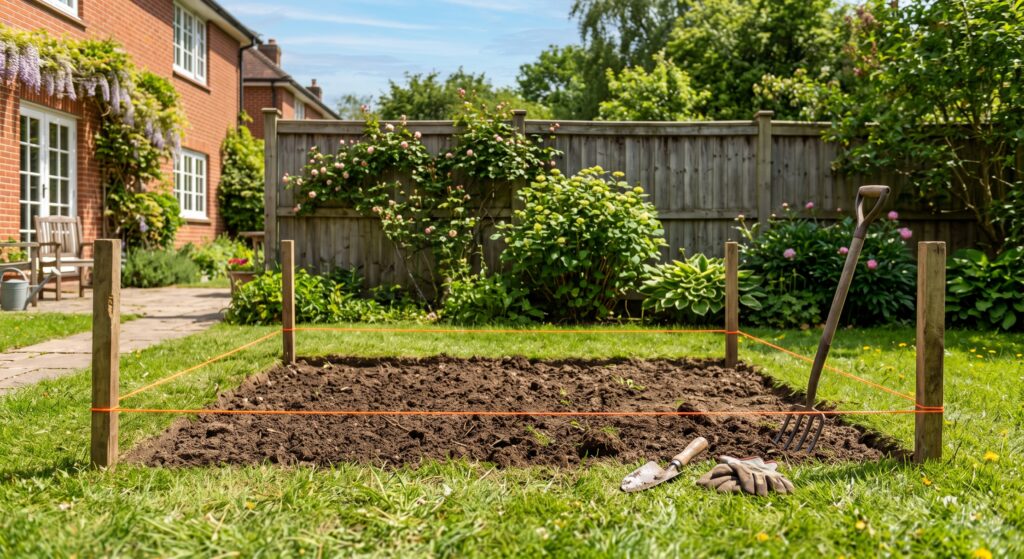
Pro Tip: If your yard doesn’t get enough sun anywhere, don’t give up. Many vegetables (lettuce, herbs, radishes) grow well in containers that you can move to chase the sun throughout the day.
Step 2: Decide Between Raised Beds, In-Ground, or Containers
| Method | Best For | Startup Cost | Difficulty |
|---|---|---|---|
| Raised beds | Beginners, poor native soil | Medium-High | Easy |
| In-ground | Large gardens, low budget | Low | Medium |
| Containers | Small spaces, patios, renters | Low-Medium | Easy |
Raised beds are often the best choice for beginners because you control the soil quality from day one, they warm up faster in spring, and they’re easier to weed and maintain. A single 4×8 ft raised bed is plenty of space to start.
Pro Tip: Don’t start bigger than you can maintain. A small, well-tended garden will outproduce a large, neglected one every time.
Step 3: Prepare and Test Your Soil
Healthy soil is the single biggest factor in a successful vegetable garden. Vegetables generally do best in soil that is:
- Loose and well-draining (not compacted clay)
- Rich in organic matter (compost, aged manure)
- Slightly acidic to neutral pH (6.0-6.8)
If you’re using a raised bed, fill it with a mix of quality garden soil and compost (roughly 60/40). If you’re planting in-ground, work compost into the top 6-8 inches of existing soil with a garden fork or tiller.
A basic soil test kit (available cheaply online or at garden centers) will tell you your pH and major nutrient levels, taking the guesswork out of fertilizing.
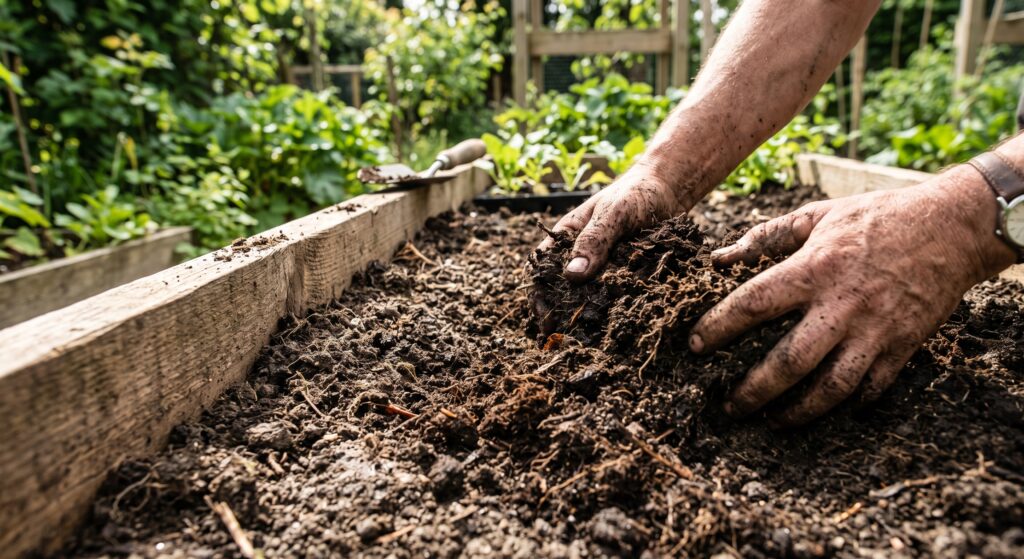
Pro Tip: Skip synthetic fertilizer at the start. A well-composted bed will feed most beginner crops for their entire first season without any additional inputs.
Step 4: Pick Beginner-Friendly Vegetables
Not all vegetables are equally forgiving. Start with crops that tolerate mistakes, grow quickly, and give you an early win.
| Vegetable | Days to Harvest | Difficulty | Notes |
|---|---|---|---|
| Radishes | 25-30 | Very Easy | Fastest crop, great for kids/beginners |
| Lettuce | 45-55 | Very Easy | Tolerates partial shade |
| Green beans | 50-60 | Easy | Bush varieties don’t need staking |
| Zucchini | 45-55 | Easy | Extremely productive, one plant is plenty |
| Tomatoes | 60-80 | Medium | Rewarding but needs staking/support |
| Peppers | 60-90 | Medium | Slower to start, loves heat |
Pro Tip: Plant a mix of fast crops (radishes, lettuce) and slower crops (tomatoes) so you get an early harvest to stay motivated while the bigger crops mature.
Step 5: Planting: Seeds vs. Transplants
Some vegetables are best started from seed directly in the garden (radishes, beans, carrots, zucchini), while others benefit from starting as transplants, either store-bought seedlings or seeds started indoors 6-8 weeks before your last frost (tomatoes, peppers).
General planting steps:
- Check the seed packet or plant tag for spacing and planting depth
- Water the soil before planting so it’s moist, not soggy
- Plant seeds at the recommended depth (usually 2-3x the seed’s width)
- Space plants according to their mature size to avoid overcrowding
- Water gently right after planting
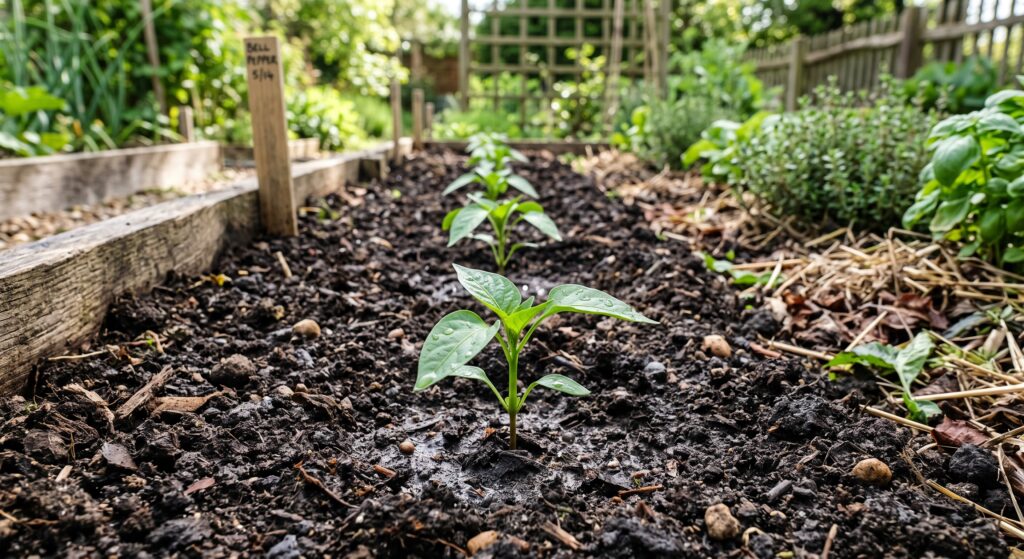
Pro Tip: Overcrowding is the most common beginner mistake. It’s tempting to pack plants in, but crowded plants compete for light, water, and nutrients, and are more prone to disease.
Step 6: Watering Your Garden
Most vegetable gardens need about 1-2 inches of water per week, whether from rain or manual watering. The key isn’t just how much water, but how you water:
- Water at the base of plants, not the leaves, to reduce disease risk
- Water deeply and less frequently rather than a little every day. This encourages deep root growth
- Water in the early morning when possible, to reduce evaporation and fungal issues
- Use mulch (straw, wood chips) to retain soil moisture and reduce watering frequency
Pro Tip: Stick your finger 1-2 inches into the soil before watering. If it’s still moist, hold off. Overwatering is just as harmful as underwatering.
Step 7: Ongoing Maintenance
A vegetable garden needs regular but manageable upkeep:
- Weeding: check weekly, since weeds compete for nutrients and water
- Mulching: apply 2-3 inches of mulch to suppress weeds and retain moisture
- Monitoring for pests/disease: catch problems early by inspecting leaves regularly
- Feeding: most gardens benefit from a light compost top-up or organic fertilizer mid-season
- Staking/support: tomatoes, beans, and cucumbers often need trellises or stakes as they grow
Beginner Vegetable Garden Checklist
- Chosen a spot with 6+ hours of direct sunlight
- Decided on raised bed, in-ground, or containers
- Tested or improved soil with compost
- Selected 3-5 beginner-friendly vegetables
- Checked last frost date for your area
- Planted seeds/transplants at correct spacing and depth
- Set up a consistent watering routine
- Applied mulch around plants
- Planned for weekly weeding and pest checks
- Marked calendar for expected harvest dates
Related Video Guides
Since tomatoes are one of the most popular (and trickiest) crops for beginners, check out this video guides to go deeper:
Frequently Asked Questions
1. How much does it cost to start a vegetable garden? A small beginner garden (4×4 or 4×8 raised bed) can be started for $50-150 depending on whether you build your own bed and buy seeds vs. transplants.
2. What’s the easiest vegetable to grow for beginners? Radishes and lettuce are widely considered the easiest. They germinate quickly, tolerate minor mistakes, and are ready to harvest in under two months.
3. Do I need fertilizer to start a vegetable garden? Not necessarily. If your soil is enriched with compost at the start, most beginner crops won’t need additional fertilizer for their first season.
4. How much sunlight do vegetables really need? Most fruiting vegetables (tomatoes, peppers, squash) need 6-8 hours of direct sun. Leafy greens can tolerate slightly less, around 4-6 hours.
5. Can I start a vegetable garden in containers only? Yes. Many vegetables, including lettuce, herbs, peppers, and even compact tomato varieties, grow well in containers, making this a great option for small spaces or renters.
6. When is the best time to start a vegetable garden? Early spring, after your last frost date, is the most common start time. In warmer climates, a fall garden is also a great option.
Once your beginner garden is up and running, you’ll likely want to branch out into more specific techniques. If you’re planning on growing tomatoes, our guides on 7 Tomato Growing Mistakes That Cut Your Harvest in Half . This helps you get more out of every plant. And if your tomatoes are flowering but not producing fruit, check out Why Your Tomatoes Have Flowers But No Fruit And How To Fix It In 3 Days.
For more practical, no-nonsense gardening guides, videos, and tips, visit SmartFarmInsights.com, where we share what actually works, based on real growing experience, not just theory.
#VegetableGarden #GardeningForBeginners #HomeGarden #GrowYourOwnFood #GardeningTips #BackyardGarden