
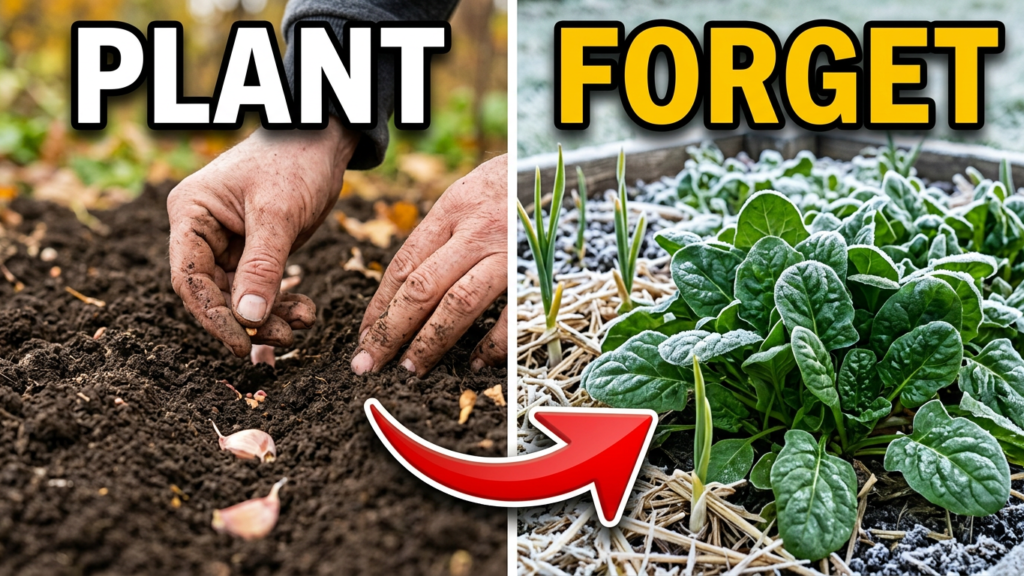
If you think it is too late to plant a fall garden, think again. There are 20 vegetables you can still get in the ground right now, and some of them will be ready in under a month. Others take longer, and this guide is honest about which are which, so you know exactly what to expect before you plant.
The crops are grouped into five sections: fast and proven crops, more quick greens and herbs, brassicas, roots and leeks, and crops you plant now and harvest next summer. Each one includes spacing, planting depth, harvest timing, and a practical tip you can use right away.
Quick Reference Table
| # | Crop | Days to Harvest | Planting Depth or Spacing | Best Grown From |
|---|---|---|---|---|
| 1 | Radishes | 25-30 days | 1/2 inch deep, 1 inch apart | Seed |
| 2 | Arugula | 30-40 days (sooner as baby leaves) | Thinly scattered, lightly covered | Seed |
| 3 | Spinach | 35-45 days | 1/2 inch deep, 3-4 inches apart | Seed |
| 4 | Mustard Greens | 30-40 days | 1/4 inch deep, a few inches apart | Seed |
| 5 | Baby Turnips | 35-45 days | 1/2 inch deep, thin to 2-3 inches | Seed |
| 6 | Tatsoi | 25 days (baby) to 45 days | 1/4 inch deep | Seed |
| 7 | Mizuna | 20-40 days | Thinly scattered, thin to a few inches | Seed |
| 8 | Cilantro | 3-4 weeks for leaves, 45-70 days full size | 1/4 inch deep | Seed (direct sow) |
| 9 | Kale | 30 days (baby), 55-65 days full size | 1/2 inch deep, 12 inches apart | Seed or transplant |
| 10 | Swiss Chard | 50-60 days | 1/2 inch deep, 6 inches apart | Seed |
| 11 | Broccoli | 55-80 days | 18 inches apart | Transplant |
| 12 | Cabbage | 70-100 days | 12-18 inches apart | Transplant |
| 13 | Cauliflower | 55-80 days | 18 inches apart | Transplant |
| 14 | Collard Greens | 60-80 days (young leaves sooner) | 18 inches apart | Transplant or seed |
| 15 | Carrots | 60-75 days | 1/4 inch deep, thin to 2 inches | Seed |
| 16 | Beets | 55-65 days | 1/2 inch deep, 2 inches apart | Seed |
| 17 | Leeks | 70-100 days | 6 inches apart in a deep hole | Transplant |
| 18 | Shallots | 7-8 months | Tip at soil surface, 6 inches apart | Bulbs |
| 19 | Fava Beans | 6-7 months (mild winters) | 2 inches deep, 6 inches apart | Seed |
| 20 | Garlic | 8-9 months | 2 inches deep, 6 inches apart | Cloves |
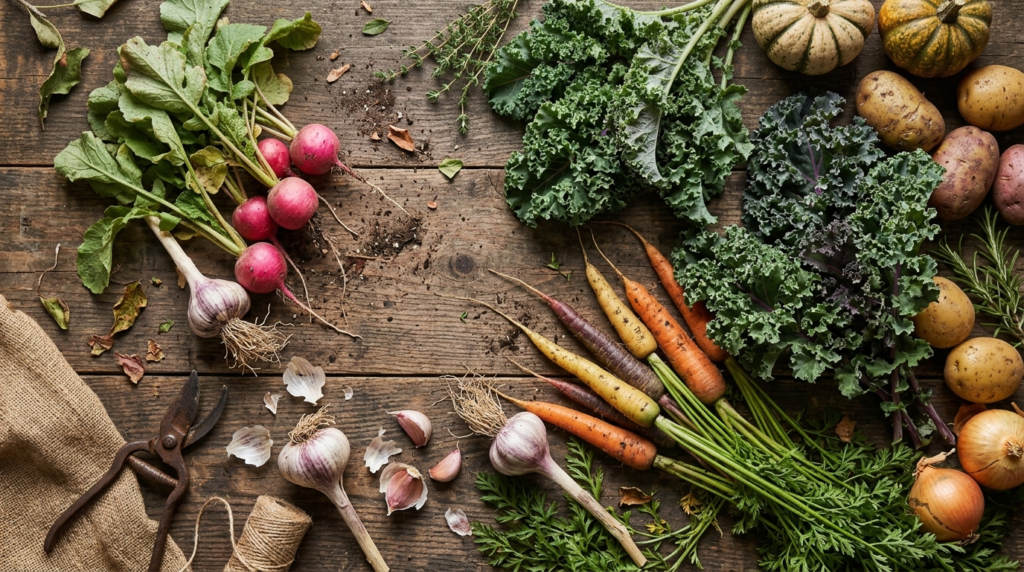
Section 1: Fast and Proven Crops
These five are the fastest, most forgiving crops on the list, and they are the best place for a beginner to start.
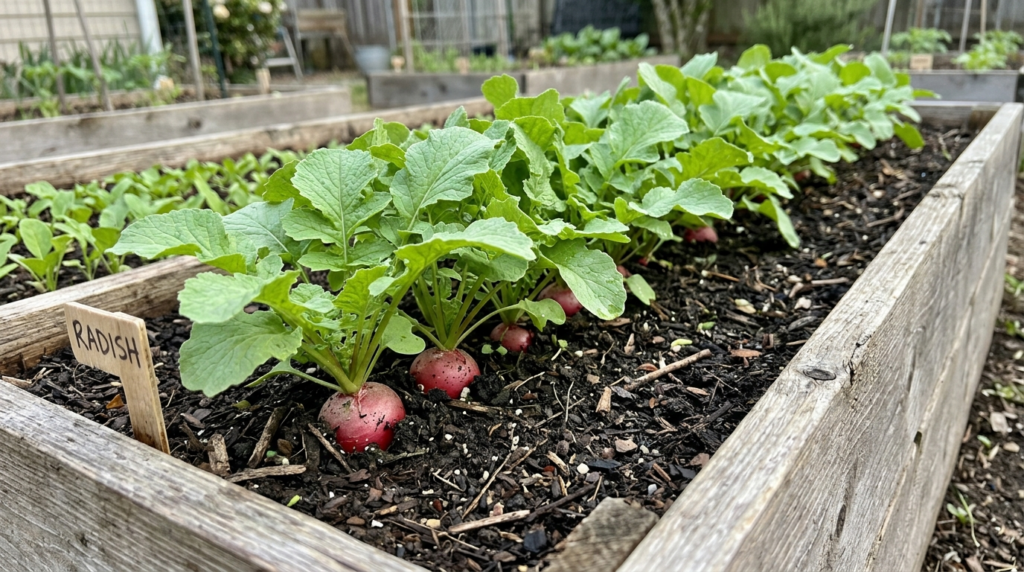
1. Radishes (25-30 days)
Radishes are the fastest crop on this list. Push the seeds half an inch deep into loose soil, about an inch apart, and keep the soil evenly moist, not soaking wet. They love cool weather and will not turn woody and bitter the way they do in summer heat.
Pull them as soon as you see color pushing up through the soil, because radishes left in the ground too long lose that crisp texture.
Pro tip: Radishes fit almost anywhere, in containers, window boxes, or tucked between slower crops like broccoli and cabbage.
2. Arugula (30-40 days)
Scatter the seeds thinly over loose soil, cover them with a light layer of soil, and keep them damp until they sprout, which usually takes about a week. Cool weather makes the flavor bolder and more peppery.
Snip the leaves with scissors and leave the base in the ground, and the plant keeps growing back for weeks.
Pro tip: Arugula is perfect in salads, on sandwiches, or piled onto pizza right before serving.
3. Spinach (35-45 days)
Spinach grows sweeter as the temperature drops, because cold weather turns some of its starches into sugar. Plant the seeds half an inch deep, about three to four inches apart, and keep the soil moist while they germinate.
Start picking the outer leaves as soon as they are big enough to eat, and the plant keeps producing new growth from the center, so one planting gives you several harvests.
Pro tip: A thin layer of mulch around the plants keeps the soil cool and moist, which is exactly what spinach wants.
4. Mustard Greens (30-40 days)
Mustard greens are one of the toughest crops you can grow in a fall garden. Sow the seeds a quarter inch deep, a few inches apart, and keep the soil damp during the first week. They handle light frost without any damage, and their flavor gets bolder as the weather cools.
Pick individual leaves as you need them, or cut the whole plant at once for a big batch of sauteed greens.
5. Baby Turnips (35-45 days)
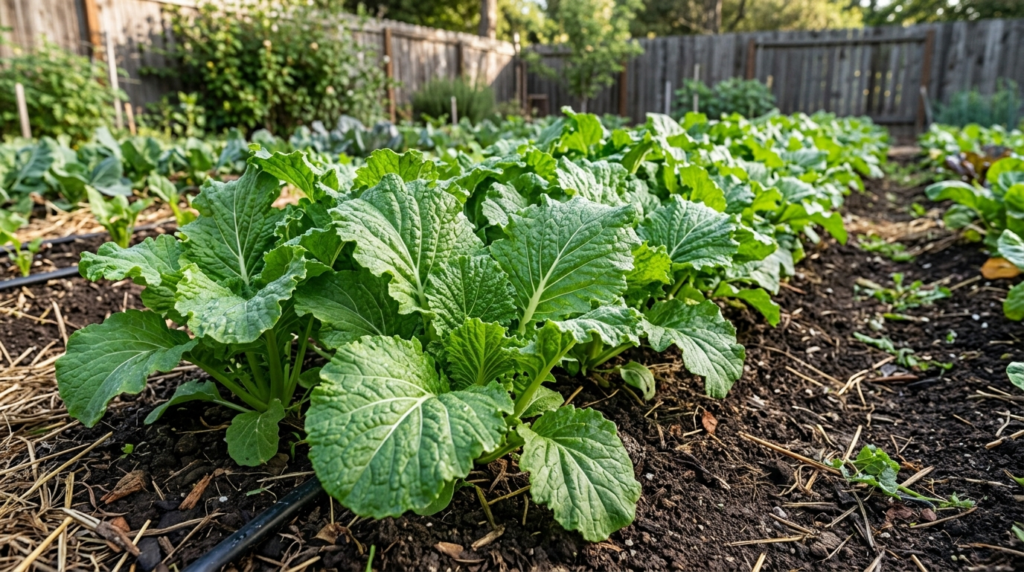
Harvest turnips young and tender for the best flavor. Sow the seeds half an inch deep, then thin the seedlings so each one has two to three inches of room, because crowded turnips will not size up.
You get two harvests from one planting: the tender roots below the soil and the leafy tops above. Both are delicious roasted, sauteed, or added to soups.
Section 2: More Quick Greens and Herbs
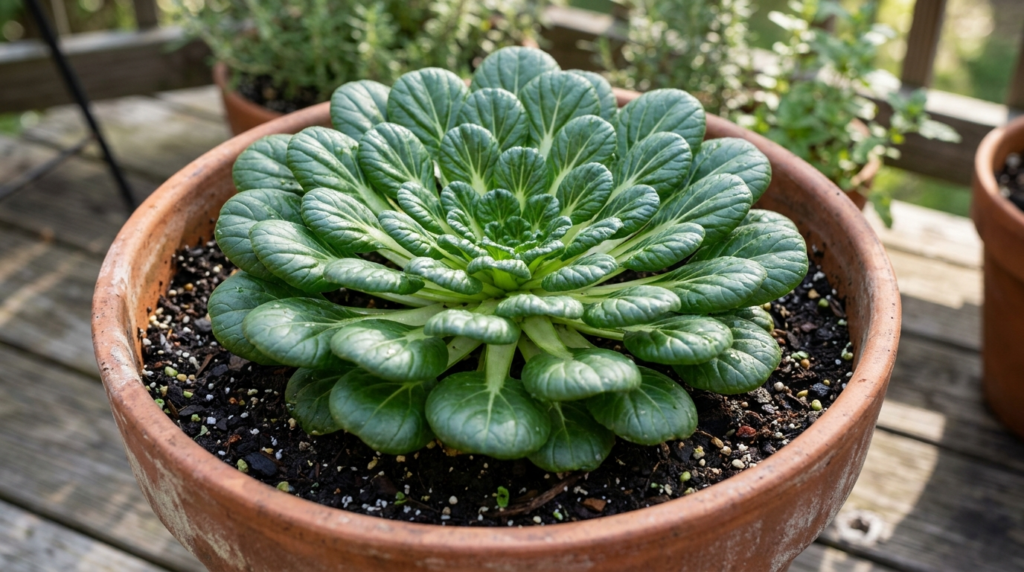
6. Tatsoi (25-45 days)
Tatsoi is an Asian green with flat, spoon-shaped leaves that grow in a neat rosette. It is ready in about 25 days as baby leaves, or 45 days for full-size plants. Sow the seeds a quarter inch deep and keep the soil moist.
It is extremely cold hardy and stays low and compact, which makes it one of the best choices for containers. Cut the outer leaves and the center keeps growing. The mild, slightly sweet flavor works in salads or stir fries.
Pro tip: If you want one new green to try this fall, tatsoi is a great pick.
7. Mizuna (20-40 days)
Mizuna is a feathery Japanese mustard green. Scatter the seeds thinly, cover them lightly, and thin the seedlings to a few inches apart. It grows fast, tolerates cold, and has a gentle peppery taste that is milder than arugula.
Cut it when the leaves are about four inches long, and it regrows several times from the same plants.
Pro tip: Its feathery leaves add texture to a mixed salad.
8. Cilantro (3-4 weeks for leaves)
Cilantro bolts quickly in summer heat but loves cool weather, which makes it a fall favorite. You can start picking leaves in about three to four weeks, and full-size plants take around 45 to 70 days.
Sow the seeds about a quarter inch deep. Cilantro does not like being transplanted, so plant it right where you want it to grow. Harvest from the outside and leave the center.
Pro tip: Sow a new small batch every couple of weeks for a steady supply.
9. Kale (30 days for baby leaves, 55-65 days full size)
Kale gets sweeter after frost and can survive well into winter. Plant the seeds half an inch deep, about 12 inches apart for full-size plants, or much closer if you plan to harvest baby greens. If you plant the seeds thickly, you can pick baby leaves in about 30 days.
Always take the outer leaves first and leave the growing center in place.
![curly kale with a light frost on the leaves]](https://smartfarminsights.com/wp-content/uploads/2026/10/image-17-1024x572.png "20 Fall Vegetables to Plant Right Now (Fast and Slow Crops)")
10. Swiss Chard (50-60 days)
Swiss chard keeps producing for weeks after the first harvest. Plant the seeds half an inch deep, about six inches apart, and keep the soil evenly moist while they sprout.
Cut the outer stalks close to the base and the center keeps pushing out new growth. Chard handles light frost well, and varieties with bright, colorful stalks look fantastic in a fall garden.
Section 3: Brassicas
Here is the honest part. Broccoli, cabbage, cauliflower, and collard greens take longer than the crops above, usually 60 to 100 days, so in colder areas it is too late to start them from seed. The fix is to buy young transplants from a nursery, which puts you weeks ahead. If your first hard frost is still a couple of months away, you still have time.
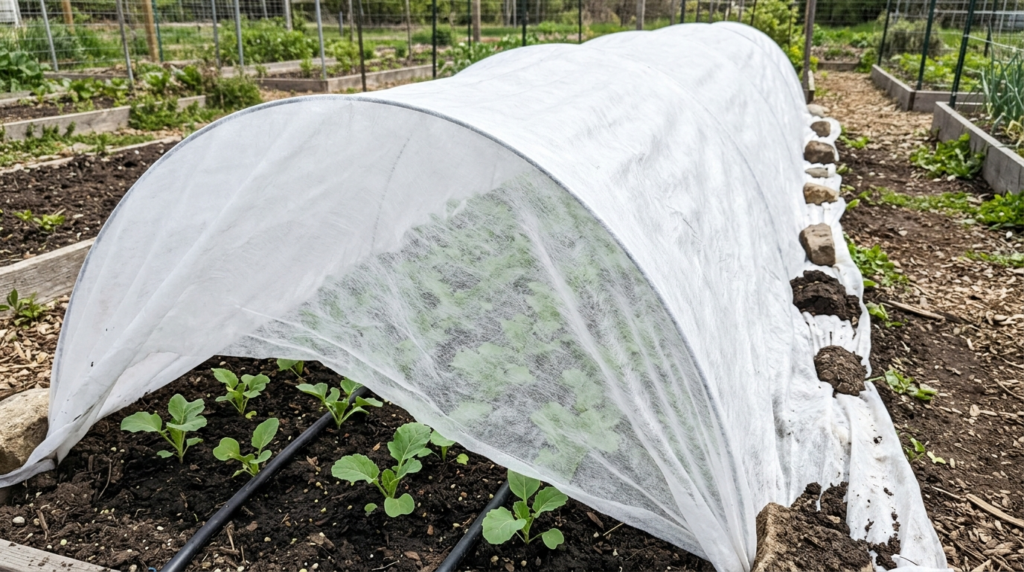
Row cover tip for this whole group: Cover young plants with a lightweight row cover right after planting. It blocks cabbage moths and other pests, and it adds a little frost protection too, which makes a real difference in the fall.
11. Broccoli (55-80 days from transplants)
Plant the seedlings about 18 inches apart, set a little deeper than they were in their pots, and water them well. Harvest the main head while the buds are still tight and green, before any yellow flowers appear.
Pro tip: Leave the plant in the ground after the main harvest, because it sends up smaller side shoots for weeks afterward.
12. Cabbage (70-100 days)
Cabbage is the slowest in this group, but it is one of the toughest vegetables for cold weather, and a light frost actually improves the flavor. Plant transplants 12 to 18 inches apart and keep the soil evenly moist, because uneven watering can cause the heads to split.
Harvest when the head feels firm and solid when you give it a gentle squeeze.
Pro tip: If you cut the head with a few outer leaves left on the stem, some varieties sprout a few small heads for a bonus harvest.
13. Cauliflower (55-80 days from transplants)
Cauliflower is a little fussier than broccoli, since it needs steady moisture and cool weather to form a good head. Plant it about 18 inches apart.
When the head is a few inches across, tie the outer leaves loosely over it, which keeps it white and protected from the cold. Harvest when the head is firm and about six to eight inches wide.
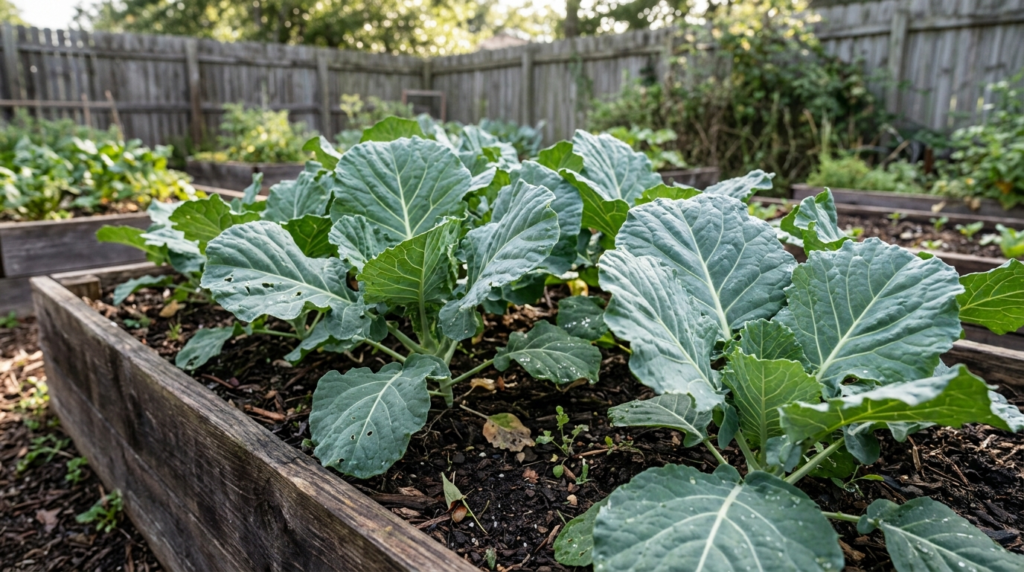
14. Collard Greens (60-80 days)
Collards are one of the most cold-tolerant leafy greens you can grow, and the flavor improves after frost. Plant transplants about 18 inches apart, or sow seeds half an inch deep. You can pick tender young leaves much sooner than full maturity.
Harvest the lower leaves first and work your way up, and the plant keeps producing.
Section 4: Roots and Leeks
These crops take a bit more patience but give you food that stores well.
15. Carrots (60-75 days)
Sow the seeds a quarter inch deep in loose, stone-free soil, and keep the top of the soil moist, because carrot seeds can take up to two weeks to sprout. Thin the seedlings to about two inches apart so the roots have room to swell.
Cold turns carrot starches into sugar, so fall carrots taste noticeably sweeter, and you can leave them in the ground and dig them as you need them.
Pro tip: Loosen the soil deeply before planting, since rocks and compacted spots make carrots split and twist.
16. Beets (55-65 days)
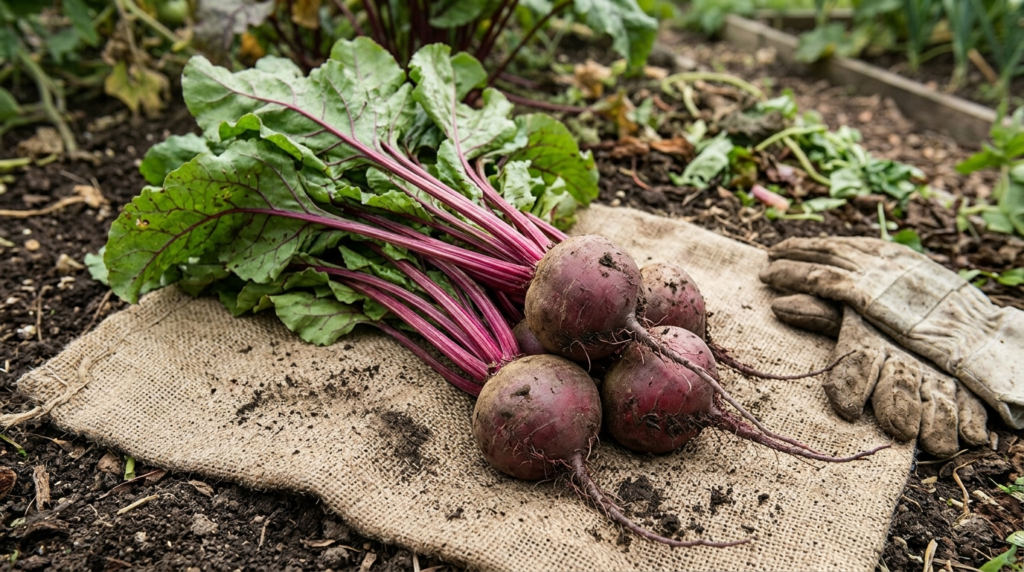
Beets give you two crops, the roots and the greens. Plant the seeds half an inch deep, about two inches apart. Each beet seed is actually a small cluster, so several seedlings may come up together and need thinning.
Harvest the roots when they are about the size of a golf ball to a tennis ball, and use the tender young leaves in salads or sauteed.
Pro tip: Beets tolerate cold well, so a light frost will not hurt them, and fall beets are usually sweeter and more tender than summer ones.
17. Leeks (70-100 days from transplants)
Leeks are the slowest in this section, so they are best for milder areas or for gardeners who protect their beds. Plant transplants in a deep hole or trench about six inches apart, and fill the soil in slowly as they grow, which produces long, white stalks.
Leeks are extremely cold hardy, and you can harvest them gradually through winter as you need them.
Pro tip: A layer of straw over the bed keeps the ground from freezing solid, which makes pulling them in January much easier.
Section 5: Plant Now, Harvest Later
These three go in the ground this fall and give you a harvest next year.
18. Shallots (7-8 months)
Shallots are planted in fall in milder climates, and in colder ones with a thick layer of mulch. Plant individual bulbs with the pointed tip just at the soil surface, about six inches apart, in loose, well-drained soil.
They multiply underground, so each bulb you plant gives you a cluster of new ones next summer.
Pro tip: Once the tops fall over in summer, let the bulbs dry in a shaded, airy spot for a couple of weeks before storing them, and they keep for months.
19. Fava Beans (6-7 months, mild winters)
Fava beans can be sown in fall in areas with mild winters. They overwinter as small plants before taking off in spring. Sow the seeds about two inches deep and six inches apart.
They are legumes, so they add nitrogen to the soil, which connects directly to the cover crop idea in our soil prep guide. If your winters are cold, wait and plant them in early spring instead.
20. Garlic (8-9 months)
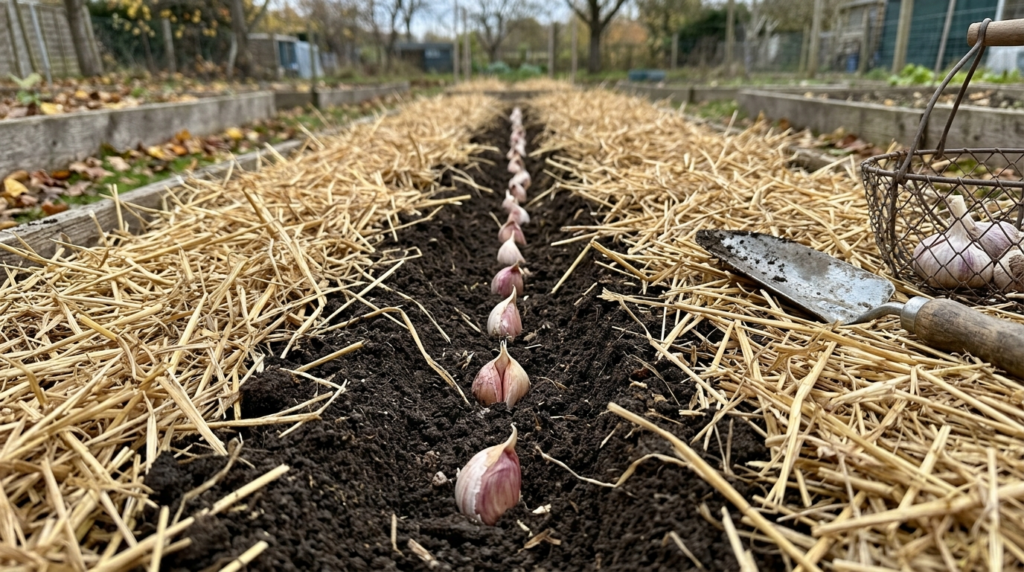
Garlic might be the easiest crop you will ever grow. Plant individual cloves about two inches deep with the pointed end facing up, about six inches apart, in well-drained soil, then cover them with a few inches of mulch. After that, you more or less forget about them.
You harvest next summer when the lower leaves turn brown.
Pro tip: Use cloves from a garden center or a local grower rather than the grocery store, since store-bought garlic is often treated to stop it from sprouting.
Which Crops Work in Containers?
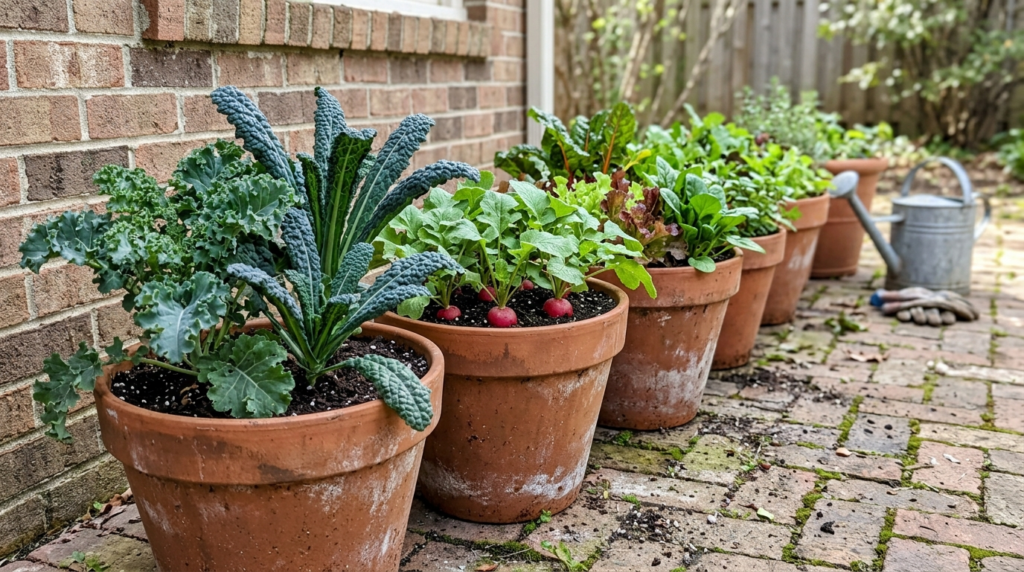
If you do not have a yard, many of these crops grow well in pots. Use a quality potting mix, make sure the pot has drainage holes, and keep an eye on moisture, since containers dry out faster than beds.
| Container Type | Crops That Work |
|---|---|
| Pots 6-8 inches deep | Radishes, arugula, spinach, tatsoi, mizuna, cilantro, kale, Swiss chard |
| Deeper pots or grow bags | Carrots, beets |
| Large containers or ground beds | Broccoli, cabbage, cauliflower |
| Beds where they can sit all winter | Garlic, shallots, leeks, fava beans |
Comparing Speed and Difficulty
| Group | Speed | Difficulty | Best For |
|---|---|---|---|
| Fast and proven (1-5) | Fastest | Easy | Beginners, quick results |
| Quick greens and herbs (6-10) | Fast | Easy | Containers, steady harvests |
| Brassicas (11-14) | Slow | Moderate | Gardeners with a longer window |
| Roots and leeks (15-17) | Medium to slow | Moderate | Gardeners who want storage crops |
| Plant now, harvest later (18-20) | Slowest | Easiest | Set-and-forget planting |
How to Use Your First Frost Date
Look up the average first frost date for your area, then count backward from it using the days to harvest in the table above. If a crop needs more time than you have left, do one of three things:
- Choose a faster crop from the list
- Buy transplants instead of starting from seed
- Plant it in a container you can protect or move indoors
Since so many of these grow fast, plant a small new batch every week or two instead of everything at once, so your harvest keeps rolling all fall. This is called succession planting.
Fall Planting Checklist
- [ ] Look up your average first frost date
- [ ] Start with the fast crops: radishes, arugula, spinach, mustard greens, mizuna, tatsoi
- [ ] Buy transplants for broccoli, cabbage, cauliflower, collards, and leeks if you are starting late
- [ ] Cover young brassicas with a lightweight row cover
- [ ] Sow carrots and beets in loose, deeply worked soil and thin the seedlings
- [ ] Plant cilantro directly where it will grow, since it does not like transplanting
- [ ] Plant garlic and shallots, then mulch them well
- [ ] Sow fava beans only if your winters are mild
- [ ] Pick a container for each crop that suits its depth
- [ ] Mulch around leafy greens to keep the soil cool and moist
- [ ] Plant a new small batch of fast crops every week or two
Frequently Asked Questions
Is it too late to plant vegetables in the fall? Not usually. Fast crops like radishes, arugula, spinach, mizuna, and tatsoi mature in under 45 days, so most gardeners can still get a full harvest. Slower crops depend on how many weeks remain before your first hard frost.
Which of these vegetables grow the fastest? Radishes are the fastest at 25 to 30 days, followed by tatsoi and mizuna, which you can pick as baby leaves in about 20 to 25 days, then arugula and mustard greens at around 30 days.
Can I start broccoli, cabbage, and cauliflower from seed in fall? In most colder areas it is too late, since they take 60 to 100 days. Buy transplants from a nursery instead, which puts you weeks ahead.
Which of these crops can I grow in containers? Radishes, arugula, spinach, tatsoi, mizuna, cilantro, kale, and chard do well in pots 6 to 8 inches deep. Carrots and beets need deeper containers. Larger crops like broccoli and cabbage need a big container or a spot in the ground.
Do I need to protect these crops from frost? Many of them handle light frost well, including spinach, kale, mustard greens, collards, and cabbage, and the cold often improves their flavor. A lightweight row cover or a layer of mulch gives extra protection during harder freezes.
Can I plant garlic, shallots, and fava beans in any climate? Garlic and shallots can be planted in fall in most climates, with a thick layer of mulch in colder areas. Fava beans overwinter best in areas with mild winters. In cold areas, plant them in early spring instead.
Related Articles
If you are building out your fall and winter growing plans, you might also want to check out:
- 5 Fast-Growing Fall Vegetables (Ready in 30-45 Days)
- 10 Container Vegetables to Plant This October
- 5 Fast Winter Vegetables for Beds and Containers
- Prep Your Garden Soil for Winter: 5 Things to Do Now
Want More Practical Growing Guides?
For more step-by-step growing guides, seasonal planting tips, and in-depth articles built for real gardeners, not just theory, visit SmartFarmInsights.com. New content is added regularly to help you get more out of every planting season, from fall planting to spring harvest.