
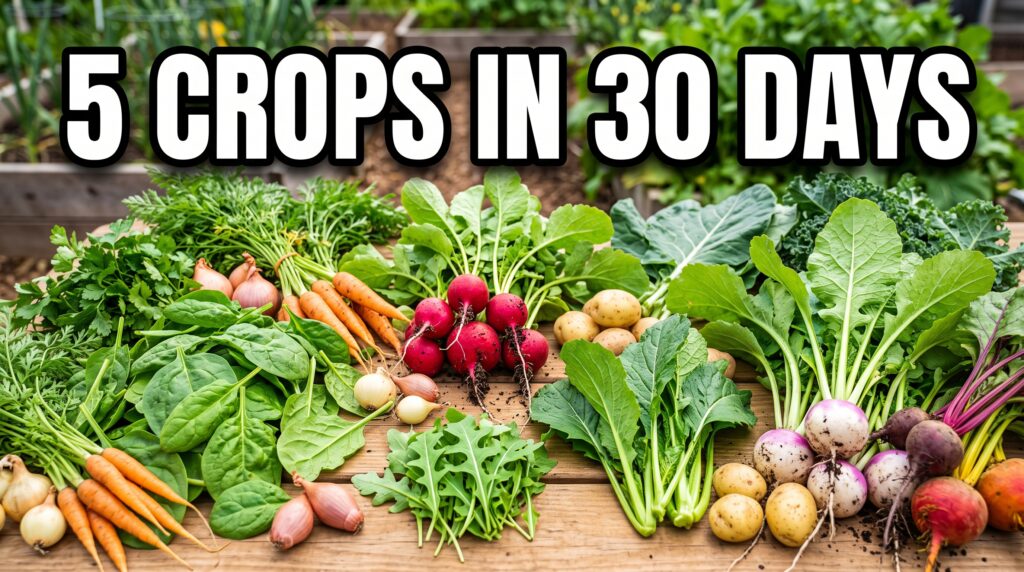
If you think growing your own food means waiting all season for a single harvest, fall gardening is about to change your mind. There are crops you can plant right now, this week, and be eating within a month. No greenhouse, no advanced skills, just the right seeds and cooler weather working in your favor.
Below are five of the fastest, most reliable fall vegetables you can grow, whether you have a full backyard garden, a couple of raised beds, or just a few containers on a balcony. Every one of them matures in 25 to 45 days, and all five can be replanted every week or two for a steady, rolling harvest instead of one big batch that comes and goes.
Quick Reference Table
| Crop | Days to Harvest | Planting Depth | Spacing | Cold Tolerance |
|---|---|---|---|---|
| Radishes | 25-30 days | 1/2 inch | 1 inch apart | Excellent |
| Spinach | 30-40 days | 1/2 inch | 3-4 inches apart | Excellent |
| Arugula | 30 days (sooner as baby leaves) | Lightly covered | Thin sow | Very good |
| Mustard Greens | 30-40 days | 1/4 inch | A few inches apart | Excellent, tolerates light frost |
| Baby Turnips | 35-45 days | 1/2 inch | 2-3 inches apart | Very good |
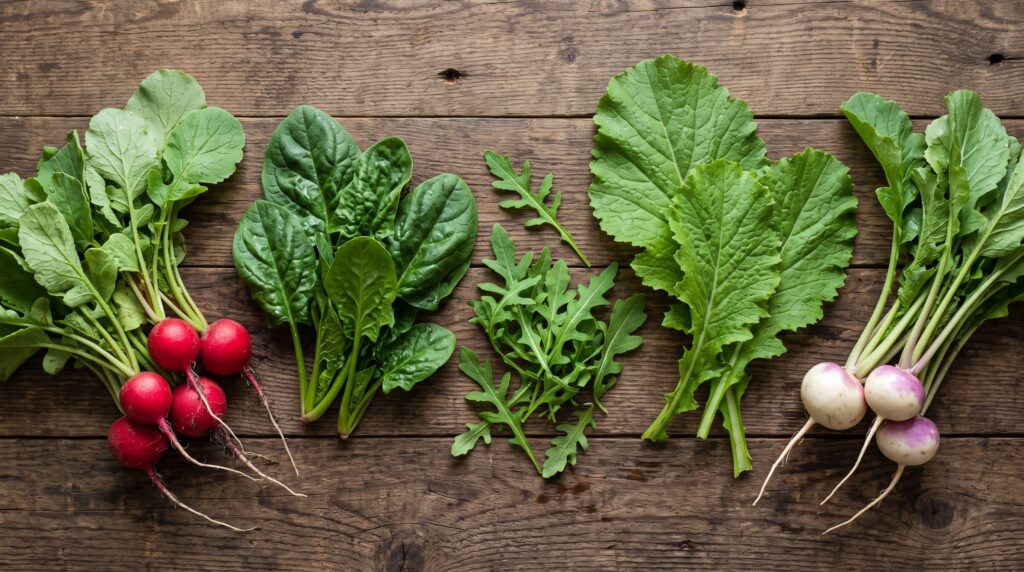
Why Fall Is a Great Time to Grow Fast Crops
Most of these vegetables are cool-season crops, which means they actually perform better as temperatures drop. Cooler weather slows down bolting (when a plant rushes to seed and turns bitter), and in the case of leafy greens like spinach, the cold triggers the plant to convert some of its starches into sugar, which makes the leaves taste noticeably sweeter. That is not a coincidence. These crops evolved to thrive in exactly the conditions fall provides, and gardeners who plant in spring and summer are often missing out on the best flavor window of the entire year.
1. Spinach
Spinach is one of the most rewarding fall crops you can grow, both for how fast it matures and how much better it tastes once the weather cools down.
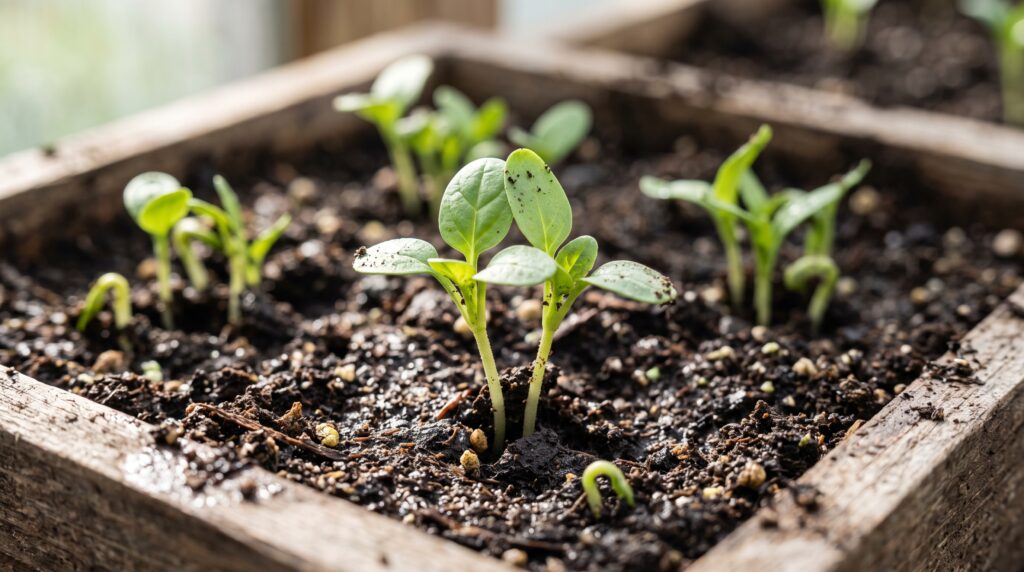
How to plant it: Sow seeds about half an inch deep, spacing each one roughly three to four inches apart so the leaves have room to fill out. Keep the soil consistently moist while the seeds are germinating. You should see the first small leaves emerge within about a week.
Harvesting: You do not need to wait for the full plant to mature. Start harvesting the outer leaves as soon as they are large enough to eat, and the plant will continue producing new growth from the center. One planting can realistically give you multiple harvests spread across several weeks.
Pro tip: Spinach planted a few weeks before the first expected frost will often taste sweeter and hold in the ground longer than spinach grown in warmer months, since the cold naturally boosts its sugar content.
2. Radishes
Radishes are the fastest vegetable on this list, and some varieties are ready to pull in as little as 25 to 30 days. If you want the quickest possible payoff from your fall garden, start here.
How to plant it: Push seeds into loose, well-drained soil about half an inch deep, spacing them roughly one inch apart. Keep the soil evenly moist, not soaked, and you will typically see sprouts within a week.
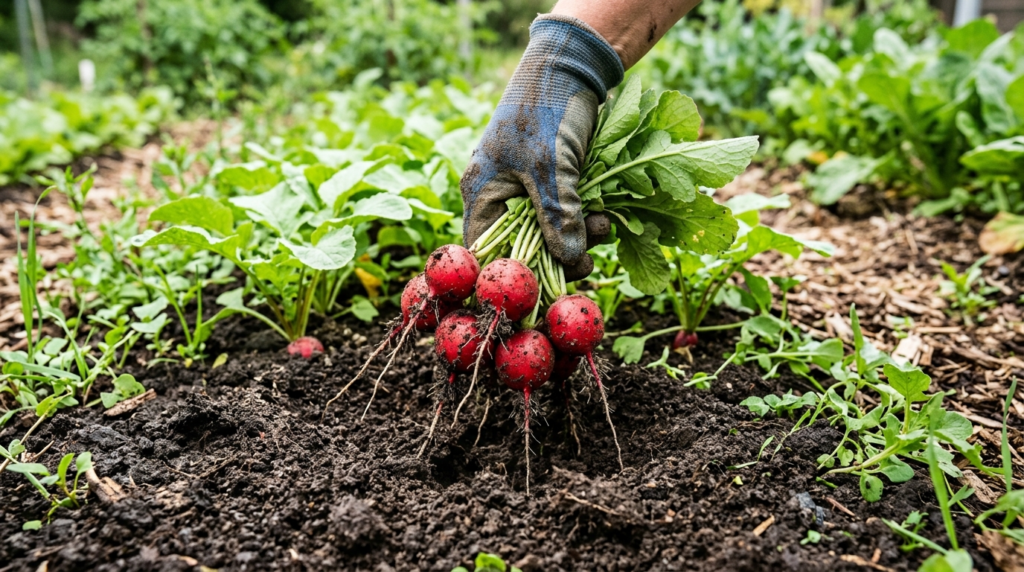
Harvesting: Once the tops of the roots start pushing up through the soil and you can see color peeking through, they are ready to pull. Do not let them sit too long once they hit maturity. Radishes left in the ground too long can turn woody and lose their crisp texture, so start checking regularly as you approach the 30-day mark.
Pro tip: Radishes are ideal for interplanting. Tuck them between slower-growing crops like broccoli or cabbage, and you will get a full harvest of radishes before the slower crops even need the extra space.
3. Arugula
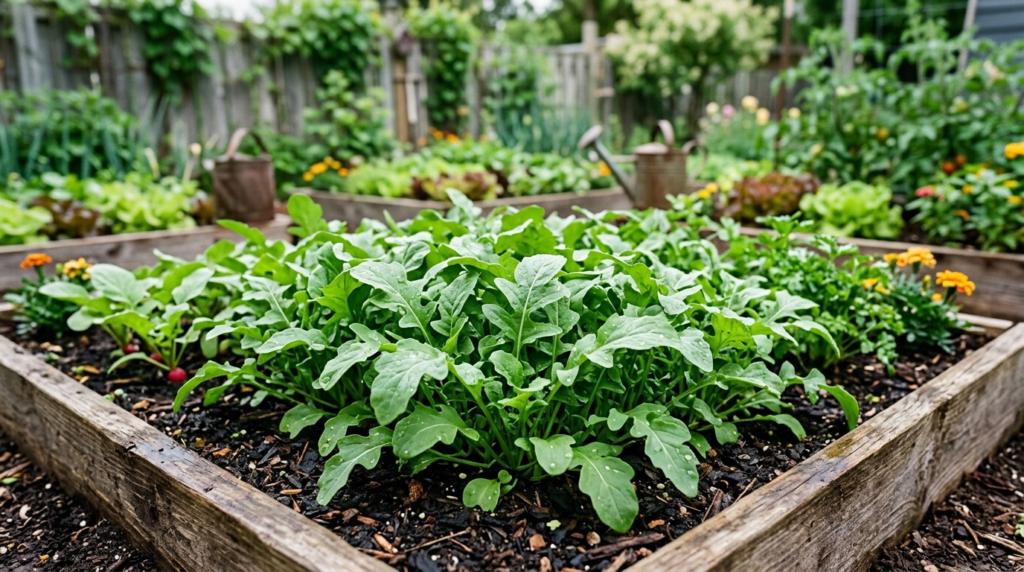
Arugula might be the fastest leafy green you can grow, ready in as little as 30 days, and even sooner if you prefer harvesting it as tender baby leaves rather than waiting for full maturity.
How to plant it: Scatter seeds thinly across loose, well-prepared soil and cover them lightly with a thin layer of soil. Keep everything moist until germination, which usually takes about a week.
Harvesting: Snip the leaves you need with scissors, leaving the base of the plant intact so it keeps producing. This gives you multiple harvests over the following weeks from a single planting.
Pro tip: Arugula’s peppery flavor becomes more pronounced in cooler weather, which is exactly why it shines as a fall crop. It works well fresh in salads, layered into sandwiches, or scattered on top of pizza or pasta right before serving.
4. Mustard Greens
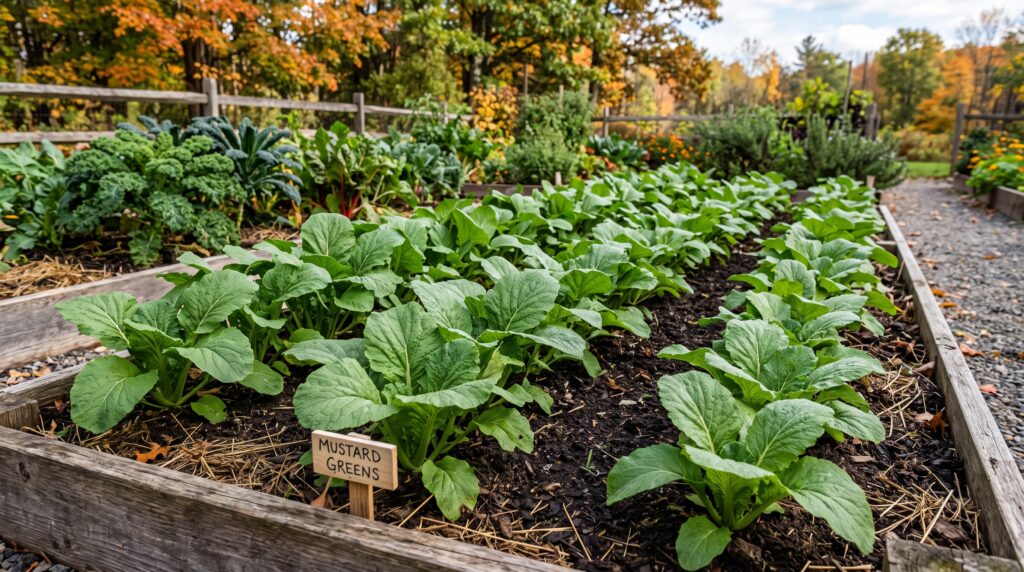
Mustard greens are one of the toughest, most reliable crops you can grow in a fall garden, and they hold up to cold better than almost anything else on this list.
How to plant it: Plant seeds a quarter inch deep in rows, spacing them a few inches apart. Keep the soil consistently damp during the first week while they germinate.
Harvesting: You can harvest individual leaves as needed, which lets the rest of the plant keep growing, or wait a bit longer and cut the whole plant at once if you want a larger harvest for a big batch of sauteed greens.
Pro tip: Mustard greens tolerate light frost without any damage, and the flavor actually gets bolder and slightly spicier as temperatures drop through fall, so do not be afraid to leave them in the ground through the first cold snaps.
5. Baby Turnips
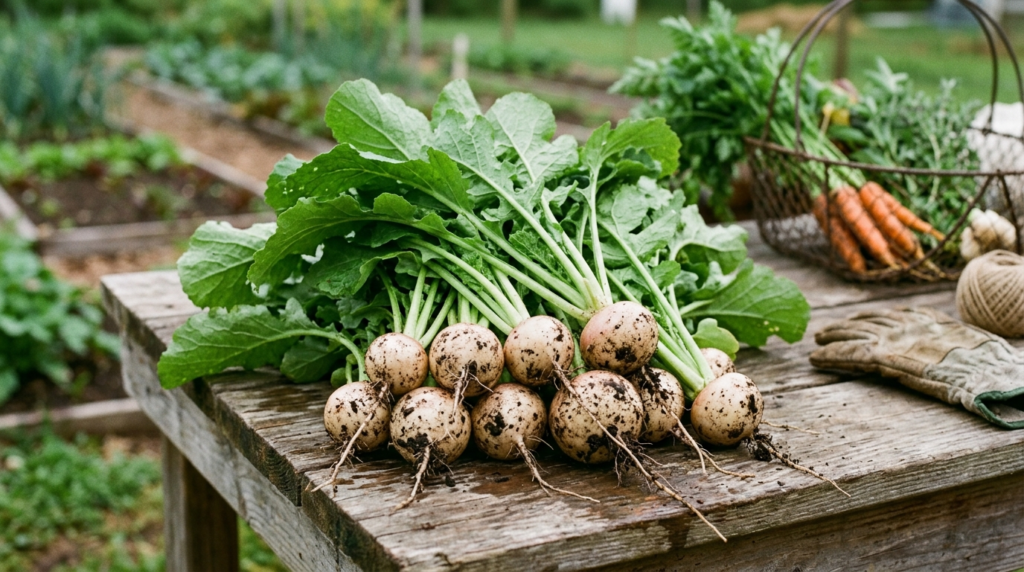
Baby turnips round out this list, and they might be the best value crop here since one planting gives you two separate harvests.
How to plant it: Sow seeds about half an inch deep. Once they sprout, thin them out so each plant has two to three inches of room. Crowded turnips will not size up properly, so do not skip the thinning step.
Harvesting: Keep the soil evenly moist throughout, especially as the roots begin to swell underground. Baby turnips are ready in 35 to 45 days when harvested young and tender, which is exactly when they taste best. Both the roots and the leafy tops are edible, whether roasted, sauteed, or added to soups.
Pro tip: Do not toss the turnip greens. Most gardeners focus only on the root and miss out on a second harvest of nutrient-dense greens that taste great sauteed with a little garlic.
Comparing Growth Speed and Effort
| Crop | Fastest to Harvest | Best for Containers | Multiple Harvests from One Planting |
|---|---|---|---|
| Radishes | Yes | Yes | No (single pull) |
| Spinach | No | Yes | Yes |
| Arugula | Yes | Yes | Yes |
| Mustard Greens | No | Yes | Yes |
| Baby Turnips | No | Yes | Yes (roots and greens) |
Succession Planting: The Real Secret to Nonstop Harvests
Since all five of these crops grow so quickly, do not just plant them once and stop there. Plant a small new batch of each one every week or two. This is called succession planting, and it is the difference between one big harvest followed by nothing, and a steady, continuous supply of fresh vegetables coming out of your garden all fall long.
A simple way to start: pick one day each week, plant a short row of radishes and a short row of spinach or arugula, and repeat. Within a few weeks you will have crops at different stages of growth, which means something is always ready to pick.
Fall Planting Checklist
- [ ] Choose a bed, raised bed, or container with well-drained soil
- [ ] Loosen the soil and remove weeds before planting
- [ ] Plant radishes and arugula first if you want the fastest results
- [ ] Keep soil consistently moist during germination (first 5-7 days)
- [ ] Thin seedlings where needed, especially baby turnips
- [ ] Start harvesting outer leaves of spinach, arugula, and mustard greens as soon as they are large enough
- [ ] Check radishes and turnips regularly once they approach maturity to avoid woody texture
- [ ] Plant a new small batch of each crop every 1-2 weeks for a rolling harvest
- [ ] Watch for the first frost date in your area and plan your last planting accordingly
Frequently Asked Questions
Can I grow these vegetables in containers? Yes. All five crops listed here do well in containers as long as the container has good drainage and enough depth for root development, roughly 6 to 8 inches for radishes and turnips, and 4 to 6 inches for the leafy greens.
Do I need to fertilize these fast-growing crops? Since these crops mature quickly, they generally do not need heavy fertilization. A balanced, well-draining soil with some compost mixed in is usually enough to get strong results without extra feeding.
What happens if I get an early frost after planting? Spinach, mustard greens, and arugula handle light frost well and often taste better afterward. Radishes and baby turnips are more sensitive once frost becomes heavier, so plan your last planting a few weeks before your area’s average first hard frost date.
Can I replant the same bed right after harvesting? Yes, and this is actually the foundation of succession planting. Once you harvest a section, refresh the soil slightly and replant with the same crop or rotate to a different one from this list.
How much sunlight do these crops need? Most of these crops do well with 4 to 6 hours of sunlight a day, though they tolerate partial shade better than summer vegetables do, which makes them a good fit for gardens that get less direct sun in the fall.
Is it too late to plant these if fall has already started? Not at all. Because all five of these crops mature in under 45 days, you can usually still plant them several weeks into fall and get a full harvest before winter sets in, depending on your local frost dates.
Related Articles
If you are working on building out a more productive garden this season, you might also want to check out:
- 7 Tomato Growing Mistakes That Cut Your Harvest in Half
- 5 Secret Tricks That Will Explode Your Tomato Harvest
- Why Your Tomatoes Have Flowers But No Fruit And How To Fix It In 3 Days
Want More Practical Growing Guides?
For more step-by-step growing guides, seasonal planting tips, and in-depth articles built for real gardeners, not just theory, visit SmartFarmInsights.com. New content is added regularly to help you get more out of every planting season.